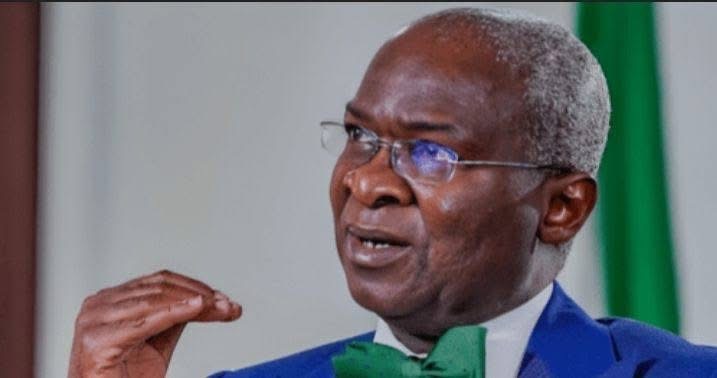
A Tribute to Excellence: Babatunde Raji Fashola (SAN) – “The Actualizer of Our Vision”
By Beckley, Francis Adebayo
When the history of modern governance in Nigeria is written, the name of Babatunde Raji Fashola will occupy a prominent place. During his eight-year tenure as Governor of Lagos State (2007–2015), Fashola transformed governance from political rhetoric into measurable performance, earning widespread recognition as one of Nigeria’s finest public administrators. He served as Governor from 29 May 2007 to 29 May 2015 after succeeding Bola Ahmed Tinubu.
For many Lagosians, his administration represented a period when government became visible, responsive, disciplined and results-oriented. It was during this remarkable era that he was fondly described as:
“The Actualizer of Our Vision.”
That title was not a mere slogan; it reflected his ability to translate long-term development plans into tangible projects that transformed Africa’s largest city.
1. Infrastructure Revolution
Perhaps no governor in Lagos history embarked on such an ambitious urban renewal programme.
His administration:
Constructed and rehabilitated hundreds of roads across the state.
Reconstructed major highways and inner-city roads.
Upgraded numerous bridges and interchanges.
Modernised drainage systems to reduce flooding.
Expanded the Lekki-Epe Expressway.
Advanced the Lagos-Badagry 10-lane Expressway project.
Accelerated the Lagos Light Rail initiative.
Supported the growth of the Lekki Free Trade Zone and the Eko Atlantic project.
Across Lagos, communities that had been neglected for decades witnessed unprecedented government attention.
2. Urban Renewal and Environmental Transformation
Before Fashola assumed office, many parts of Lagos suffered from poor sanitation, illegal refuse dumps and environmental decay.
His government:
Beautified highways and public spaces.
Developed landscaped parks and gardens.
Restored public squares.
Improved waste management systems.
Enforced environmental sanitation regulations.
Cleared illegal structures obstructing roads and drainage.
Regenerated areas such as Oshodi, which later became a model for further redevelopment.
His famous belief was simple:
“A clean city reflects disciplined governance.”
3. Transportation Reform
Transportation became one of the defining successes of his administration.
His government strengthened:
The Bus Rapid Transit (BRT) system.
Modern bus terminals.
Road traffic management.
Intelligent traffic control.
Preparatory works for rail transportation.
Ferry and water transportation initiatives.
These reforms significantly improved mobility for millions of commuters.
4. Education Sector Development
Education received unprecedented attention.
His administration:
Constructed ultra-modern schools.
Rebuilt numerous public schools.
Improved teachers’ welfare and training.
Introduced modern learning environments.
Upgraded libraries.
Improved science laboratories.
Strengthened technical and vocational education.
Many schools built during his administration remain among the finest public educational facilities in Nigeria.
5. Healthcare Improvement
His government:
Upgraded general hospitals.
Improved primary healthcare centres.
Expanded maternal healthcare.
Invested in emergency medical services.
Improved ambulance response systems.
Expanded child immunisation programmes.
Healthcare delivery became more accessible across Lagos.
6. Security Architecture
Recognising that economic growth depends on security, Fashola invested heavily in public safety.
His administration:
Strengthened the Lagos State Security Trust Fund.
Supplied patrol vehicles and communication equipment.
Improved surveillance capacity.
Supported police operations.
Enhanced emergency response services.
These efforts contributed significantly to making Lagos one of Nigeria’s safest commercial centres.
7. Financial Discipline
One of Fashola’s greatest strengths was prudent financial management.
His administration became known for:
Transparent budgeting.
Fiscal discipline.
Improved internally generated revenue.
Efficient project execution.
Better value for public expenditure.
Rather than relying solely on federal allocations, Lagos expanded its own revenue base, enabling sustained investment in infrastructure.
8. Housing Development
Housing remained a major priority.
His government:
Built several housing estates.
Expanded affordable housing schemes.
Improved urban planning.
Modernised land administration.
Encouraged private sector participation in housing delivery.
9. Rule of Law and Institutional Reforms
As a Senior Advocate of Nigeria (SAN), Fashola placed strong emphasis on institutions rather than personalities.
His administration strengthened:
Public procurement systems.
Civil service reforms.
Judicial infrastructure.
Due process in government contracting.
Professionalism in public administration.
10. Information Technology and E-Governance
Long before digital governance became fashionable, Lagos under Fashola embraced technology.
His administration:
Expanded electronic governance.
Improved digital tax administration.
Modernised government records.
Enhanced public service efficiency through technology.
11. Economic Growth
Under his leadership:
Lagos consolidated its position as Nigeria’s commercial capital.
Private investment increased.
Investor confidence improved.
Business-friendly policies attracted both local and foreign investors.
Today, Lagos remains one of Africa’s largest sub-national economies, and many observers attribute part of that trajectory to reforms implemented during this period.
12. Effective Ebola Response
One of the defining moments of his administration came in 2014 when the Ebola virus disease reached Lagos.
His government:
Activated emergency response systems.
Traced contacts rapidly.
Coordinated healthcare agencies.
Conducted extensive public awareness campaigns.
Contained the outbreak efficiently.
Nigeria’s successful containment of Ebola was widely praised internationally, with Lagos playing the central role.
13. Leadership Style
Fashola’s administration became synonymous with:
Discipline
Competence
Accountability
Professionalism
Attention to detail
Project monitoring
Timely execution
Service delivery
Unlike many leaders, he was known for personally inspecting projects, responding to citizens’ complaints and insisting on high standards across government.
Why He Was Called “The Actualizer of Our Vision”
The phrase captured the essence of his leadership.
The vision of transforming Lagos into a modern African megacity had been articulated before his tenure.
Fashola distinguished himself by converting that vision into visible, measurable progress through roads, schools, hospitals, transport reforms, environmental renewal, institutional strengthening and disciplined governance.
He demonstrated that continuity in government, when combined with competence and accountability, could deliver lasting results.
Legacy
Today, years after leaving office, many of the institutions, infrastructure and governance reforms initiated under Fashola continue to serve millions of Lagos residents.
His administration proved that:
Good governance is possible.
Public funds can be translated into public value.
Vision without execution is merely aspiration.
Leadership is measured not by promises made, but by lives transformed.
Babatunde Raji Fashola (SAN) remains a reference point in discussions on transformational governance in Nigeria.
His years in office stand as a benchmark for disciplined administration, strategic planning and effective public service, an enduring legacy that explains why many Lagosians remember him as The Actualizer of Our Vision.
By Pastor Beckley,Francis Adebayo
MSc, FCA, FCIB