
THE BILL BANNING PUBLIC BUS PREACHING IN NIGERIA: A WELCOME DEVELOPMENT
By Abdul-Ganiyy Raji
The National Assembly recently passed the Federal Road Safety Corps (Amendment) Bill, 2026. The bill imposes a ₦50,000 fine on anyone found trading, hawking, or preaching in commercial buses.
The bill is currently awaiting presidential assent before it can become law and be enforced.
According to emerging details, the bill is intended to enhance passenger safety and prevent activities that may distract drivers.
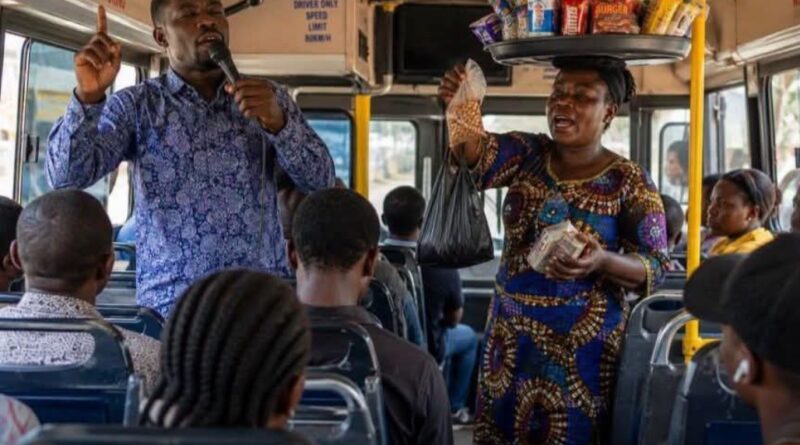
It is a common practice in Nigeria to see preachers inside commercial buses. Such preachers are found on both intra-state and inter-state buses. I have seen preachers who preach and sing religious songs inside buses from the beginning of a journey to its final destination. Ibadan, in South-West Nigeria, is over 120 kilometres from Lagos. It is not unusual to find some preachers preaching from Lagos to Ibadan and from Ibadan to Lagos. Some even cover longer distances than these. This practice is not only an infringement on the rights of passengers to privacy and quiet during their journey but also a potentially dangerous practice in a religiously diverse nation like Nigeria.
I have heard of people of different faiths engaging in heated arguments inside commercial buses simply because a preacher made a statement that another passenger of a different faith found offensive.
Just imagine a Muslim saying on a public bus conveying both Muslims and Christians: “Anybody who does not accept Allah as his God, Prophet Muhammad as His Messenger, and the Qur’an as a divine book will not make Heaven.” How would the Christian passengers on the bus feel? Many would naturally feel hurt or offended. If they fail to restrain their emotions, they may challenge the Muslim preacher, and the exchange could easily escalate into a serious confrontation.
Personally, I have also heard Christian preachers make similar statements in commercial buses. It is common to hear statements such as: “Even if you are a Muslim, if you do not accept Jesus Christ as your Lord and Saviour, you cannot make Heaven.” Others say: “Jesus is the only way. Any other way leads to eternal destruction.” “Accept Christ as your Lord.” “Jesus died for you.” “Give your life to Christ today.” Imagine how non-Christians on the bus could feel when they hear such statements.
Passengers do not board commercial vehicles to be lectured about religion. They are entitled to enjoy their journey in peace. They may choose to sleep, read a book, remain silent, listen to a radio programme through their earphones, or watch a movie on their phones. Some passengers are returning home exhausted after a busy day at work. Others are on their way to work and need the quiet to prepare mentally for the day ahead. Some are going for job interviews, while others are sick and heading to the hospital. Preaching and singing religious songs in commercial vehicles carrying such passengers not only inconvenience them but also infringe upon their right to a peaceful journey.
A friend once told me about his experience in a commercial vehicle where a woman carrying a sick baby on her back confronted another female passenger who was preaching on the bus. According to him, the woman accused the preacher of being insensitive and inconsiderate for preaching loudly without regard for the feelings and circumstances of other passengers. Other passengers had to intervene because she was on the verge of exchanging blows with the preacher.
We have enough mosques and churches in Nigeria. Religious preaching should be conducted in places of worship and other designated venues, not inside commercial vehicles. Commercial buses should not become platforms for religious propagation or congregational singing.
Nigeria is a multi-religious country. If I may ask, which religion should be allowed to preach in commercial vehicles, and which should not? When adherents of different faiths quarrel or fight inside a commercial bus because of religious preaching, who will intervene to restore peace?
The new bill is a welcome development. It promotes a peaceful religious atmosphere and helps prevent avoidable interfaith confrontations in our commercial vehicles.
It is important to note that the bill does not prevent people from preaching in their places of worship or other approved locations. It merely exempts commercial vehicles from being used as venues for religious preaching.
I therefore support the bill and respectfully appeal to the President to grant it speedy assent.
Abdul-Ganiyy Raji is the National Da’wah Officer and Secretary to the Mission Board of NASFAT. He writes from Lagos.