Of Isaac Fayose’s Sneeze and Peter Obi’s Cold: Nigeria Says No to Leadership That Panics
By Seye Oladejo, Lagos APC Chieftain
Politics has an uncanny way of exposing character. It is rarely the carefully choreographed rallies or rehearsed television interviews that reveal the true temperament of a leader. Rather, it is the manner in which he responds to pressure, criticism and uncertainty. It is in those defining moments that Nigerians are able to distinguish between a politician and a statesman.
The recent episode involving social media influencer Prince Isaac Fayose and Mr. Peter Obi has inadvertently provided Nigerians with yet another opportunity to assess the leadership disposition of the National Democratic Congress perennial presidential hopeful.
Isaac Fayose, one of Peter Obi’s most vocal online supporters, publicly accused the former Anambra State governor of ingratitude and openly declared that he could withdraw his support. In any mature democracy, such disagreements between politicians and their supporters are hardly extraordinary. Political loyalty is neither permanent nor unconditional. Every serious politician gains supporters and loses them. That is the nature of democratic politics.
What followed, however, was revealing.
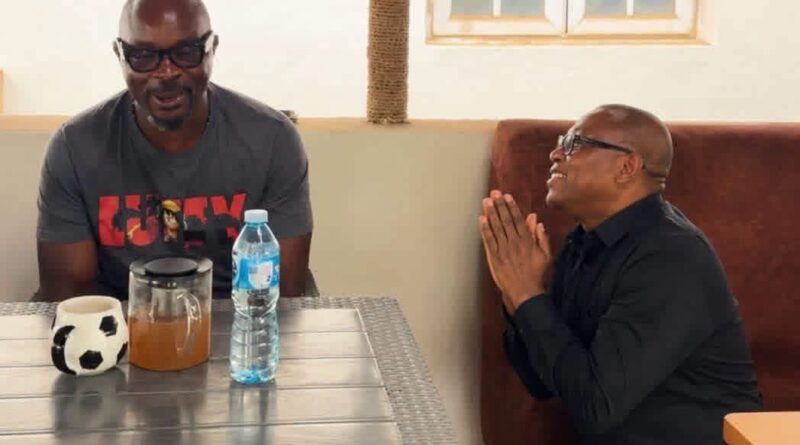
Barely had Isaac Fayose sneezed politically than Peter Obi appeared at his residence in what many interpreted as an urgent peace mission. Before long, the same influencer who had publicly expressed disappointment was once again proclaiming Obi as Nigeria’s in-coming President.
There is absolutely nothing wrong with reconciliation. Every politician should maintain cordial relationships with supporters. However, the speed, urgency and optics of the intervention raise legitimate questions about political confidence and emotional steadiness.
If the displeasure of a single social media influencer could provoke such immediate political fire-fighting, Nigerians are entitled to ask a more profound question: how would such a leader respond to the far greater pressures that accompany the Presidency of the Federal Republic of Nigeria?
The Nigerian Presidency is infinitely more demanding than managing the emotions of social media influencers.
Leadership is not measured by how quickly one rushes to extinguish every political spark. It is measured by the confidence to remain focused on the larger objective while engaging criticism with maturity, perspective and emotional balance.
Leadership requires patience.
It requires resilience.
Above all, it requires consistency of temperament.
That consistency is perhaps the most indispensable quality of anyone aspiring to occupy Nigeria’s highest office. A President cannot afford to be calm in one circumstance and panic in another, steadfast with one challenge and evasive with the next. The office demands emotional stability, predictability and the courage to remain the last man standing when political storms gather.
It is against this standard that Peter Obi’s response to Isaac Fayose becomes even more instructive.
The urgency with which he moved to pacify one dissatisfied supporter contrasts sharply with his political history whenever genuine crises confronted the parties under whose platforms he sought power.
From the All Progressives Grand Alliance (APGA) to the Peoples Democratic Party (PDP), from the Labour Party (LP) and now the African Democratic Congress (ADC), a familiar pattern appears to have emerged. Rather than remaining to resolve internal disagreements, build consensus and strengthen institutions from within, Mr. Obi has repeatedly chosen the exit door at the earliest signs of political turbulence.
His political journey has become one of serial migration rather than institutional consolidation.
One is therefore left wondering why a politician who could not stay to weather storms within his own political parties would now display such urgency over what was, at best, a storm in a tea cup involving a social media influencer.
The Presidency of Nigeria is not an office one simply walks away from when the going gets tough. It demands resilience, perseverance, emotional intelligence and the capacity to absorb criticism without losing focus.
This is precisely where the difference between statesmanship and populism becomes evident.
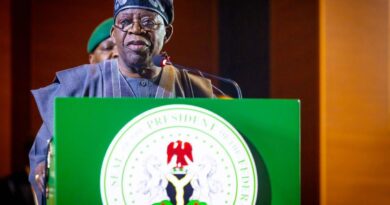
President Bola Ahmed Tinubu assumed office fully aware that the difficult reforms required to rescue Nigeria’s economy would attract criticism. The removal of fuel subsidy, foreign exchange reforms, tax restructuring and fiscal realignment were never going to be universally popular.
Yet rather than govern by opinion polls or the daily mood of social media, he has remained focused on reforms designed to secure Nigeria’s long-term prosperity.
Today, encouraging signs are gradually emerging. Investor confidence has strengthened considerably. Nigeria’s capital market has ranked among the world’s strongest performers in recent times. Public revenues have improved significantly. Infrastructure projects continue across the federation, while security agencies have recorded measurable successes against criminal elements. Though challenges remain, the direction of travel is becoming increasingly positive.
That is what leadership demands-calmness under pressure, not panic under criticism.
Unfortunately, the politics promoted by Peter Obi and many of his supporters increasingly appear driven by perception rather than performance.
Every challenge is portrayed as a national catastrophe.
Every policy becomes evidence of impending collapse.
Every temporary setback is amplified into proof that Nigeria has failed.
This politics of perpetual pessimism may generate applause on social media, but it does not build nations.
Even more instructive are the lessons from recent elections.
For years, Nigerians have been inundated with endless social media commentaries, trending hashtags, livestreams, podcasts and influencer endorsements, all carefully designed to project an image of overwhelming political dominance for the opposition.
Yet when Nigerians eventually entered the polling booths, reality told an entirely different story.
The recently concluded Ekiti State governorship election once again exposed the enormous gulf between virtual popularity and electoral acceptance. Despite months of relentless social media activism, opposition forces failed to translate online enthusiasm into electoral success. The same pattern has played out repeatedly across virtually every off-season election conducted since the 2023 general elections.
The verdict is becoming unmistakable.
Social media is an important platform for political communication, but it has also proved to be grossly overrated as a predictor of electoral success.
Otherwise, several months of daily online outrage, coordinated influencer campaigns and relentless digital propaganda would have produced outcomes far more impressive than the opposition’s disappointing performances in Ekiti and the succession of off-season elections that have consistently reaffirmed the electoral strength of the APC.
Hashtags do not count as ballots.
Retweets are not votes.
Influencers are not electoral umpires.
Ultimately, elections are won in communities, at polling units and through tangible governance-not inside the echo chambers of cyberspace.
The Isaac Fayose episode therefore represents something far bigger than a disagreement between an influencer and his preferred politician.
It exposes a political movement that appears excessively dependent on online validation and a presidential hopeful seemingly too eager to respond to every tremor within that digital ecosystem.
But nations are not governed from podcast studios.
They are not administered through trending hashtags.
Neither are presidential elections won by influencer endorsements alone.
Nigeria deserves a leader whose confidence is rooted in conviction rather than applause; one whose composure is not shaken by every dissenting voice; one who remains steady when storms gather instead of rushing from one political fire to another.
As 2027 approaches, Nigerians will once again be presented with a choice-not merely between political parties, but between two contrasting leadership temperaments.
One anchored on resilience, reforms and steadfastness.
The other increasingly defined by reaction, optics and political anxiety.
When Isaac Fayose sneezed, Peter Obi appeared to catch a political cold.
The Presidency of the Federal Republic of Nigeria demands a far stronger immune system.
Nigeria has outgrown panic politics.
Our future belongs to leadership that remains calm in adversity, resolute in the face of criticism and unwavering in the pursuit of national progress.