
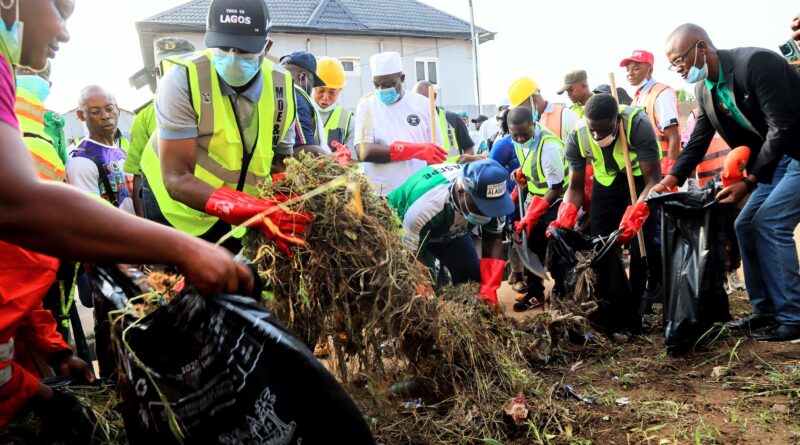
Save Lagos from Returning to the Pre-1999 Era of Heaps of Refuse
…A cleaner and healthier Lagos is our collective responsibility
By Taiwo Olapade
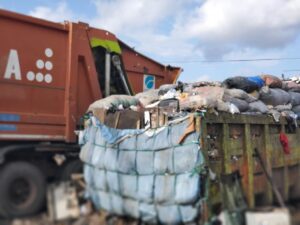
The current efforts by the Lagos State Government to evacuate heaps of refuse from some parts of the metropolis while also curbing indiscriminate dumping should be a collective responsibility. This is because we are all exposed to danger in the event of an outbreak of diseases in the country’s most populous state. You may say, “God forbid,” but through our actions and inactions, we sometimes become the architects of our own problems.
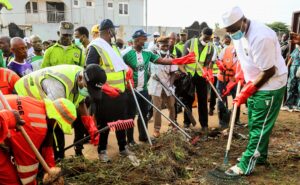
Lagos must not return to the pre-1999 era when heaps and mountains of refuse were visible in many parts of the state. Tackling the waste crisis was one of the first major assignments undertaken by the then Governor, Bola Tinubu, in his quest to ensure a cleaner and healthier Lagos. You will recall that the ingenuity of the Tinubu administration led to the establishment of the Lagos State Waste Management Authority (LAWMA) and the Kick Against Indiscipline (KAI) Brigade, both saddled with the responsibility of effective waste management and the enforcement of environmental laws.
As expected, the Lagos State Government acknowledged the concerns of residents over the indiscriminate dumping of refuse in some parts of the metropolis, especially as the rainy season sets in. In recent days, we have all witnessed the destruction caused by days of heavy rainfall, with many people still counting their losses. No doubt, many homes and businesses have been devastated by the torrential rains, forcing many residents to remain indoors.
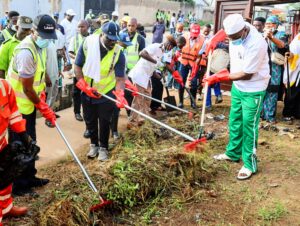
Governor Babajide Sanwo-Olu and the State Commissioner for the Environment and Water Resources, Tokunbo Wahab, have taken the lead in addressing the situation.
The Governor consequently ordered the immediate scale-up of canal dredging and waste evacuation operations across the state, directing the Ministry of the Environment and Water Resources, the Lagos Waste Management Authority (LAWMA), the Lagos State Environmental Protection Agency (LASEPA), and all other agencies in the sector to intensify their efforts.
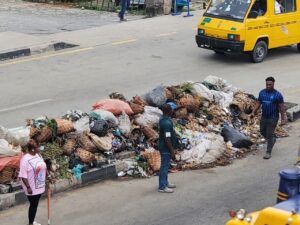
However, as a rapidly growing megacity, Lagos generates about 13,000 tonnes of waste daily, ranking among the highest waste-generating cities in Africa. The question many would like to ask is: what has become of the ambitious and progressive Waste-to-Wealth initiative introduced during the administration of now President Bola Tinubu? Should we conclude that waste has become a burden rather than a blessing to the state? Today, what is commonly seen under the Waste-to-Wealth concept is that a good number of residents now survive by scavenging through waste in search of recyclable materials to earn a living.
During the last Environmental Sanitation Exercise, the Lagos State Government announced that work on the Transfer Loading Station at Olusosun is expected to be completed before the end of the year. The facility is expected to transfer about 2,500 metric tonnes of waste daily to the Material Recovery Facility in Ikorodu.
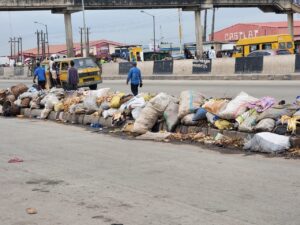
The State Commissioner for the Environment and Water Resources, Mr. Tokunbo Wahab, disclosed this while leading top government officials on an inspection of the level of work at the Olusosun dumpsite after monitoring the sanitation exercise with Governor Sanwo-Olu in Surulere. He explained that the project, being executed by the concessionaire, Messrs Zoomlion, would support the state’s Waste-to-Wealth programme.
Should we then conclude that the state government has not abandoned the noble Waste-to-Wealth initiative but is merely slow in its implementation? To me, it is not rocket science to achieve this objective. Like many other laudable government initiatives, perhaps the lack of political will has been the major obstacle.
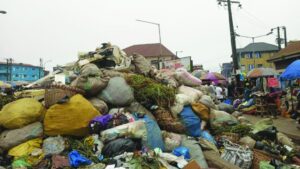
Finally, I wish to appeal to the state government to expedite action on the acquisition and deployment of more waste compactors to improve waste evacuation, as earlier promised. It should also ensure that the newly introduced Waste Police are adequately empowered and provided with the necessary support to function effectively. Members of Community Development Associations (CDAs) should also be actively engaged in protecting the environment. Appropriate sanctions must be imposed on anyone caught dumping refuse in unauthorised locations.
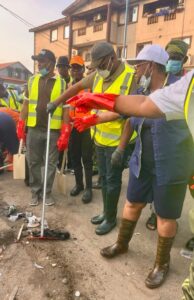
Lagos cannot afford to return to the pre-1999 era when heaps of refuse were visible everywhere. Never.
The state government must also demonstrate a strong commitment to removing all existing obstructions from drainage channels and guard against a recurrence of such practices.
—Taiwo Olapade, a broadcast journalist, writes from Lagos.