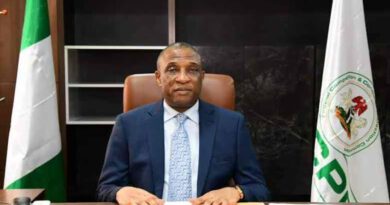

Lagos Holds 2026 World Food Day Finale, Showcases Agriculture Opportunities
…Sanwo-Olu: Lagos targets 40% food self-sufficiency, unveils fresh measures
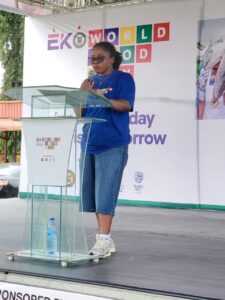
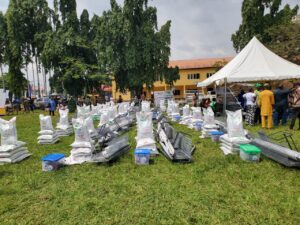
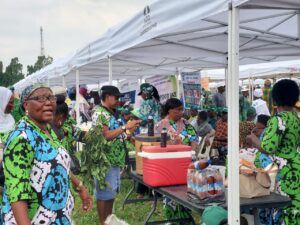
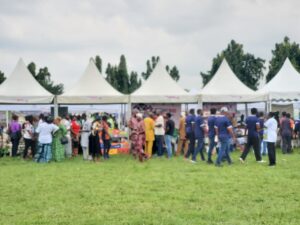
There was a massive turnout of stakeholders across the agricultural value chain on Friday as the Lagos State Government held the grand finale of the 2026 World Food Day celebration at the Nigeria Police College, GRA, Ikeja.
The event was attended by the Deputy Governor of Lagos State, Dr. Kadri Obafemi Hamzat, who represented Governor Babajide Olusola Sanwo-Olu.
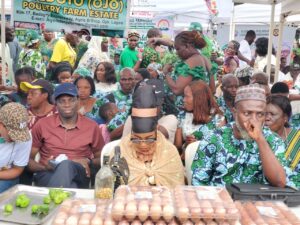
The event provided an opportunity for players across the agricultural value chain to showcase food products and other consumables at affordable prices to residents, while also creating opportunities for farmers, processors, equipment manufacturers and investors to connect.
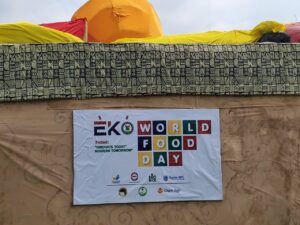
The one-stop agricultural marketplace also featured farm machinery and equipment, with exhibitors engaging potential investors and other stakeholders in mechanised farming, irrigation and aquaculture.
Commissioner for Agriculture and Food Systems, Ms. Abisola Olusanya, reaffirmed the state government’s commitment to reducing food prices and achieving sustainable food security.
She said the government remained conscious of the responsibility of feeding Lagos’ huge population, noting that various initiatives and policies implemented over the past seven and a half years had been geared towards strengthening the state’s food system.

Olusanya expressed confidence that the incoming administration would build on the foundation laid by the Sanwo-Olu administration, while appreciating the governor for his support and confidence in the ministry.
Also speaking, Ruth Owojaye of the British American Tobacco Nigeria Foundation (BATNF) said the organisation remained committed to sustainable agriculture, disclosing that it had invested more than ₦5 billion in empowering farmers.
She said the foundation had reached nearly two million beneficiaries through training, input supplies and improved access to water.
Owojaye stressed the need for continued innovation in agriculture, particularly by ensuring that women, youths, rural communities and smallholder farmers had access to the tools, knowledge and resources required to transform the sector.
Delivering the governor’s keynote address, Hamzat said Lagos, despite being Nigeria’s smallest state by landmass, was home to more than 22 million people, making food security a major priority for the administration.
He said the state could not achieve food security simply by expanding farmland, but through increased productivity on available land, efficient sourcing from partner states, greater processing of locally consumed food and improved movement of food from farms to households with reduced waste.
According to him, the theme of this year’s World Food Day, “Innovate Today, Nourish Tomorrow,”underscores the need for practical innovations to tackle hunger and malnutrition and ensure access to adequate, nutritious and affordable food.
Hamzat said the administration’s Five-Year Agricultural and Food Systems Roadmap was designed to increase Lagos’ food self-sufficiency from about 20 per cent to 40 per cent of its food demand.
He highlighted the administration’s investments in infrastructure and markets, production and processing, people and skills, as well as innovation and support for farmers.
On infrastructure and markets, the deputy governor said the Lagos Central Food Security Systems and Logistics Hub at Ketu-Ereyun, Epe, was at an advanced stage, while Mid-Level Agro-Produce Hubs had been commissioned at Abijo in Ibeju-Lekki and Dairy Farm in Agege.
He added that construction was ongoing at Opebi in Ikeja and Bombata on Lagos Island, with plans for more hubs across the state’s local government areas and local council development areas.
Hamzat also disclosed that under the Produce for Lagos Programme, farmers were being linked to structured offtake arrangements at agreed prices, while registration was ongoing following the launch of the ₦500 billion Guarantee Offtake Fund.
In production and processing, he said the Lagos Rice Mill, Imota, had an annual capacity of about 2.5 million 50-kilogramme bags of rice, created more than 2,000 jobs, empowered about 500 farmers and supported over 1,500 hectares of paddy farmland.
He said the Eko Agro Mechanisation Programme had enabled smallholder farmers to access machinery through the Tractor-On-The-Go app, with more than 3,000 hectares cultivated and approximately 6,000 farmers benefiting.
The governor also highlighted ongoing initiatives in livestock and fisheries, including the Cattle Feedlot Project at Igbodu, Epe, and the Lagos Aquaculture Centre of Excellence at Igbonla, Epe, which he said would help boost local fish production and reduce dependence on imports.
On human capital development, Hamzat said the Lagos Agripreneurship Programme, launched in 2020, had trained more than 4,400 youths and women in poultry, aquaculture, vegetable farming and piggery, while over 2,000 beneficiaries had received assets and inputs to start or expand their businesses.
He added that the Lagos Agric Scholars Programme was also encouraging secondary school students to develop interest in agriculture through practical agricultural activities.
The governor further announced that ₦200 million had been set aside for the third edition of the Lagos Agrithon, following the award of ₦150 million in grants to agritech innovators at the Lagos Agrinnovation Summit 2.0.
Hamzat said the Ounje Eko Farmers Subsidy Programme had supported 5,000 farmers with a 25 per cent subsidy on animal feed, fertilisers and tractor-hiring services, contributing to the stabilisation of egg prices in 2025.
He identified innovation, stronger partnerships with food-producing states and development partners, investment in farmers and other players in the food economy, reduction of post-harvest losses, and the pursuit of affordability, nutrition and sustainability as key priorities for the sector.
Hamzat, who noted that the 2026 World Food Day celebration was the final one of the present administration, expressed appreciation to farmers for their contribution to feeding Lagos, assuring them that the importance of agriculture and food security must continue beyond the current administration.