
Katsina And The Prospect Of Subnational Renewal
By Dakuku Peterside
Can Nigeria’s states become true engines of development, or are they condemned to remain administrative outposts of a distant federal centre? This question has new urgency as citizens grow weary of a federation that promises much but delivers too little in the places where life is actually lived. Communities, farms, schools, hospitals, markets, and local roads are where impact matters most. The federal government may control national discourse, but for most Nigerians, the quality of governance is experienced first and most directly at the subnational level.
The tragedy is that many states have not justified the confidence placed in them. Increased allocations too often yield larger convoys, broader patronage networks, grandiose projects, and scant structural change. Poverty deepens. Youth unemployment festers. Schools decay. Hospitals struggle. Rural roads vanish after the rains. Insecurity spreads into spaces vacated by weak institutions. For many citizens, government is something they hear about, not something they experience.
Katsina as a Test Case for Subnational Renewal
Yet the story is not uniformly bleak. Across the federation, a few states are beginning to show that subnational leadership can still matter. Katsina State, under Governor Dikko Umaru Radda, offers one of the more convincing examples of how a state confronted by serious challenges can begin to organise itself around a coherent development vision. The following sections describe how Katsina’s experience demonstrates this possibility across major sectors.
Katsina is not an easy canvas. It sits in a region scarred by insecurity, poverty, unemployment, educational divides, and institutional fragility. These are not abstract problems but lived realities. They shape whether farmers work, children stay in school, pregnant women reach care, traders move goods safely, and young people see hope beyond desperation. In such a context, leadership is not evaluated by slogans, but by clear thought, disciplined execution, and the guts to build institutions that meet people’s needs.
“Building Your Future”: Planning Beyond Slogans
Governor Radda’s governing philosophy is anchored in the “Building Your Future” agenda, a strategic framework that links today’s emergencies with tomorrow’s possibilities. Its importance does not lie merely in its title but in its logic. Radda’s argument is that building for the future is not a luxury to be postponed until current problems disappear. Rather, it is the surest way to confront the present. Many of today’s crises are the harvest of yesterday’s failure to plan. To build the future, therefore, is to repair the present.
This mindset explains the administration’s focus on security, agriculture, education, healthcare, infrastructure, renewable energy, public-sector reform, social services, innovation, ICT, and enterprise. The approach is imperfect, and no serious observer should claim Katsina’s burdens are gone. Yet, it constitutes a clear break from the piecemeal governance that has weakened many Nigerian states. Radda seems to grasp that development is an ecosystem. Security without jobs is fragile; education without health is incomplete; agriculture without roads, irrigation, and power is trapped; infrastructure without human capital is sterile; empowerment without institutions is temporary.
Agriculture as the Anchor of Rural Prosperity
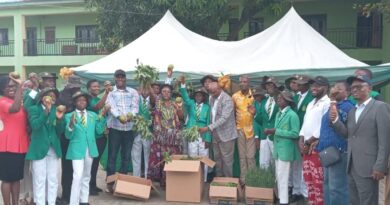
Agriculture is the clearest expression of this integrated approach. Katsina’s future depends on the land’s productivity and the dignity of its farmers. Since 2023, the administration has treated agriculture not as seasonal charity but as a platform for food security, jobs, and rural prosperity. It began with baseline reviews across all 34 local government areas, irrigation assessments in the Katsina, Daura, and Funtua zones, dam evaluations, farmer consultations, extension worker deployment, and reforms to input distribution. The aim: remove corrupt middlemen, register farmers digitally, revive assets like the Songhai Farm in Dutsin-Ma, and create policies for youth agribusiness and climate-smart farming.
That preparatory work has now moved to implementation. Farmers have received power tillers, tractors, solar pumps, fertiliser, improved seeds, herbicides, and pesticides. The irrigation programme, with tube wells, dredgers, and dam rehabilitation, has strengthened dry-season farming and reduced dependence on rain-fed agriculture. The youth agribusiness programme offers trainees start-up support and recognises that agriculture must appeal to young people. Mechanisation centres, women-focused interventions, agro-processing initiatives, and the KASPA digital platform show Katsina is seeking to build an agricultural value chain, not just distribute inputs.
The 2026 consolidation, including ward- and polling-unit-based fertiliser distribution, aims to bring support closer to real farmers. In a country where programs are often hijacked before reaching beneficiaries, this matters. Sustained transparency, published beneficiary data, yield monitoring and impact tracking could make Katsina a model for agricultural reform in rural areas.
Education as the Foundation of Mobility
Education is the second major pillar. No state can escape poverty by neglecting classrooms. Katsina’s history of educational disadvantage makes schooling central to its agenda. Radda’s background as an educationist brings coherence to reform. An investment of over ₦120 billion—about a quarter of the annual budget—shows that education is seen not as a token but as the foundation for mobility and competitiveness.
The initiatives are extensive: new secondary and junior secondary schools in underserved areas, rehabilitation of existing schools, smart schools in senatorial zones, ICT centres, tablets, solar-powered learning environments, and a feeding programme reportedly reaching hundreds of thousands of pupils. Recruiting over 7,000 teachers and training thousands more in modern, digital methods addresses an essential truth: education reform is impossible without capable, motivated teachers.
Equally significant is the administration’s scholarship programme under the Building Your Future agenda. Support for tertiary students, merit awards, and the sponsorship of Katsina students abroad in fields such as Artificial Intelligence, Bioengineering, and Medicine demonstrate an effort to connect children in rural communities to the knowledge economy of the future. This is what serious subnational leadership should do. It must not only repair broken classrooms; it must expand the imagination of a generation.
Healthcare from the Ward Level Up
Healthcare is another measure of the administration’s seriousness. A state denying basic care cannot claim to be developing. Katsina’s upgrade of over 268 Primary Healthcare Centres across 34 local government areas targets rural communities and aims for one functional PHC per ward. Tricycle ambulances, outreach, renovated theatres, expanded maternity units, staffing, drug supplies, and solar-powered facilities address obstacles that determine whether healthcare is accessible or just promised.
The investments at the tertiary level are also notable: a dialysis centre, an imaging centre under construction, residency programmes, medical scholarships and specialised medical procedures that would once have required patients to travel elsewhere. Health insurance coverage for hundreds of thousands of residents, if effectively implemented and funded, could reduce the devastating burden of out-of-pocket spending. The real test will be sustainability: drugs must remain available, facilities must be maintained, workers must be motivated, data must be collected, and services must be monitored. But the direction is unmistakable. Katsina is trying to build a health system that starts at the ward level and rises to specialised care.
– Dr Dakuku Peterside is the author of “Leading in a Storm” and “Beneath the Surface”