2027: When Religion is no longer the Issue
By Seye Oladejo, Lagos APC Chieftain
As the countdown to the 2027 general elections gradually begins, political actors have started testing narratives they believe could shape the electoral conversation. Among these is the perennial attempt to reduce Nigeria’s democratic choices to the prism of religion. It is a temptation that has surfaced repeatedly in our political history, yet it has consistently failed to answer the real questions confronting the Nigerian electorate.
The truth is simple: in 2027, religion should remain a non-issue.
This is not because religion is unimportant. Far from it. Religion remains one of the strongest moral and social institutions in our society. It shapes our values, strengthens our communities and inspires millions of Nigerians to serve humanity with compassion and integrity. However, governance is measured not by religious affiliation but by competence, vision, courage, capacity and measurable outcomes.
The Nigerian voter is becoming increasingly sophisticated. Our people have experienced enough political cycles to understand that poverty does not discriminate between Christians and Muslims. Inflation does not ask for one’s denomination before eroding purchasing power. Unemployment has no religious identity. Insecurity does not issue victims with questionnaires about their faith before striking. Good governance, therefore, cannot be assessed through religious sentiments but through practical solutions and tangible results.
The 2023 presidential election provided sufficient lessons in this regard. Despite intense campaigns around religious identity, Nigerians ultimately voted based on a combination of political calculations, regional dynamics, party structures, leadership credentials and individual convictions. While religion featured prominently in public discourse, governance has since taken centre stage as citizens evaluate the administration on economic reforms, infrastructure development, security interventions, social investments and institutional reforms.
As we approach 2027, the conversation is naturally shifting from identity to performance.
President Bola Ahmed Tinubu inherited an economy facing serious structural distortions. Difficult but necessary reforms were initiated to stabilise public finances, restore investor confidence and reposition the economy for sustainable growth. Such reforms inevitably come with short-term pains, but increasingly, both domestic and international indicators are beginning to reflect signs of recovery. Infrastructure development continues at an unprecedented pace, tax reforms are broadening government revenues, local refining capacity is improving, and foreign investment confidence is gradually returning.
These are the issues that deserve interrogation.
The electorate should ask which candidate possesses the competence to sustain economic reforms while cushioning their social impact. Which candidate has demonstrated administrative capacity? Who has assembled the strongest team? Who understands the complexity of governing a diverse federation of over 200 million people? These are legitimate electoral questions.
Religion answers none of them.
Nigeria’s political history equally teaches that effective governance has never been monopolised by adherents of any particular faith. Across our states and at the federal level, history records competent and incompetent leaders from every religious background. Excellence has no exclusive religious ownership. Neither does failure.
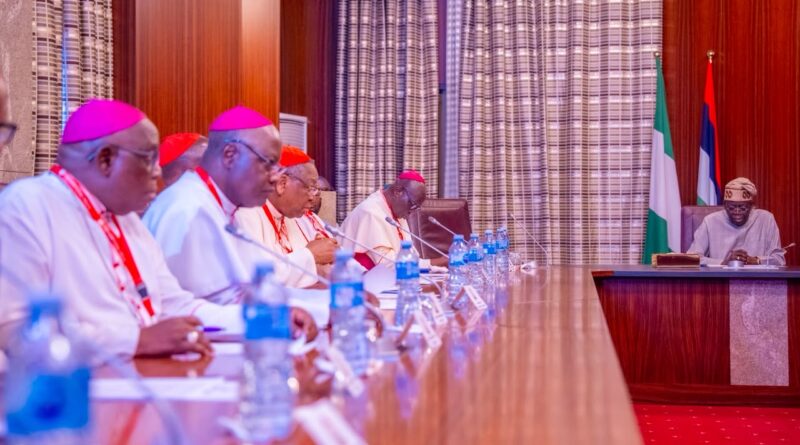
Indeed, our diversity should be seen as a strength rather than an electoral weapon. Christians and Muslims have lived together peacefully in countless communities across Nigeria for generations. Families are often interfaith. Businesses thrive through partnerships that transcend religious identities. Markets, schools, workplaces and neighbourhoods demonstrate daily that ordinary Nigerians co-exist far better than political narratives sometimes suggest.
It is therefore unfortunate whenever politicians seek to manufacture religious anxieties for electoral advantage. Such tactics neither improve governance nor strengthen national unity. Instead, they distract citizens from demanding accountability and performance.
The future of Nigeria depends on issue-based politics.
Political parties should compete on policy alternatives. Candidates should debate economic recovery, education, healthcare, agriculture, technology, security, industrialisation, energy, constitutional reforms and youth employment. They should present measurable programmes and defend their records before the electorate. Democracy is enriched when ideas compete-not identities.
This is particularly important for our young voters who constitute a significant proportion of the electorate. Many of them are less interested in the religious affiliation of candidates than in opportunities for employment, entrepreneurship, education, digital innovation and improved living standards. They seek leaders who can expand possibilities, not deepen divisions.
The opposition equally owes Nigerians a responsibility to elevate the quality of political engagement. Elections should never become competitions in religious mobilisation. Rather, they should be contests of ideas, programmes and credibility. If there are alternative policy prescriptions, let them be presented. If there are better governance models, let Nigerians evaluate them objectively.
The electorate deserves nothing less.
For the ruling APC, the challenge remains to continue demonstrating through governance that competence ultimately outweighs propaganda. Sustained improvements in infrastructure, economic stability, security and social welfare will naturally diminish attempts to divert attention toward sectional narratives.
As 2027 approaches, Nigerians should insist on one simple principle: let every candidate be judged by character, competence, capacity, courage and compassion-not by the place where he worships.
History will not remember the religious identity of those who governed successfully. It will remember whether they united the nation, strengthened its institutions, improved the lives of its citizens and left behind a more prosperous country.
Nigeria stands at another defining moment. We must refuse every attempt to reduce our democratic choices to religious arithmetic. The election of 2027 must be about ideas over identity, performance over prejudice, competence over sentiment and national development over sectional politics.
Religion should remain in our hearts. Governance should remain in capable hands.
That is the Nigeria we must collectively build.