
FIRST LADY OF NIGERIA URGES GIRLS TO LEAD NIGERIA’S DIGITAL FUTURE
…Says ICT Can Be Used to Solve Real-Life Challenges
First Lady of Nigeria, Senator Oluremi Tinubu, has urged the winners of the 3rd edition of the National Girls in ICT Competition to remain curious, confident and courageous.
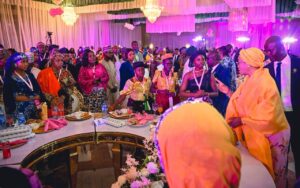
She spoke at a dinner organised to honour the winners by the organisers of the competition, the Federal Ministry of Communications, Innovation and Digital Economy.
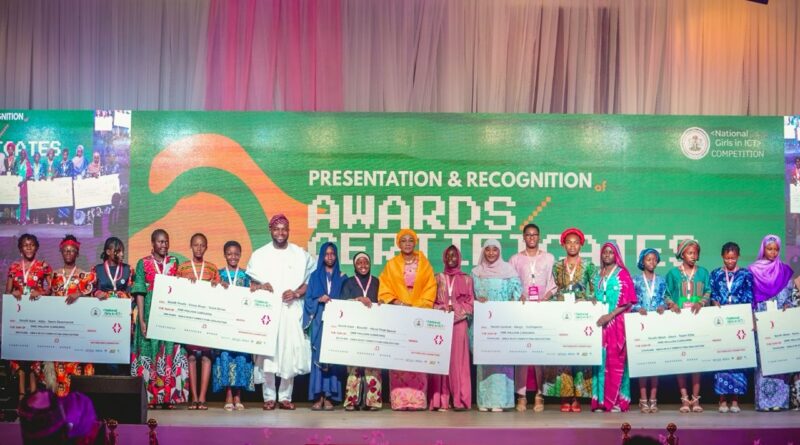
“I am glad to learn that this year’s edition of the National Girls in ICT Programme engaged over 3,700 girls across the six geopolitical zones of the country through competitions, boot camps, mentorship sessions and innovation challenges,” she said. “From this pool of talent, 111 girls emerged as regional winners, from which we now have six finalist teams, who are all here tonight.”
“From smart fish pond monitoring systems and AI-powered farm protection to platforms supporting deaf patients and children with autism, these projects highlight the programme’s success in nurturing digital skills, creativity, leadership and problem-solving capabilities among young girls. I am very proud of your achievements and congratulate you all.”
“This programme is in line with the Renewed Hope Agenda of the administration of His Excellency, President Bola Ahmed Tinubu, GCFR, which places youth empowerment, digital innovation, education, economic inclusion and human capital development at the centre of national transformation.”
The First Lady applauded the launch of Code Clubs, which she said would further strengthen digital learning and innovation within schools and communities.
“This is a strategic investment in the future of Nigeria and a reflection of Mr President’s commitment to nurturing the next generation of innovators and tech leaders.
“Remain curious, confident and courageous. Never underestimate your inquisitiveness, which is essentially the power behind your ideas. Let this programme remind you that your dreams are valid, your potential is limitless, and the future of innovation can proudly bear your imprint.”
Special Education Centre, Bauchi, emerged as the overall winner of the National Girls in ICT Programme for a project titled “Hands That Speak.”
The team outperformed five regional finalists with solutions that blend assistive technology and inclusive design, underscoring the competition’s focus on practical, community-centred innovations.
Prizes for the six finalist teams included one-million-naira cheques, high-performance laptops and mentorship packages. The top six placements were: Special Education Centre, Bauchi (1st); Federal Government Girls’ College, Cross River (2nd); Resonance Science School, Abia (3rd); Sweet Heaven High School, Kano (4th); Government Science Secondary School, Abuja (5th); and Kidvarc High School, Osun (6th).
The evening celebrated projects that tackle real-world problems—from AI-powered farm protection and smart fish-pond monitoring to platforms supporting deaf patients and children with autism—and highlighted the organisers’ aim of turning young innovators into problem-solvers for Nigeria’s communities.
Minister of Communications, Innovation and Digital Economy, Bosun Tijani, earlier situated the competition within a sweeping national digital agenda, insisting that talent—not natural resources—will determine future competitiveness.
“Tonight has reminded us of something very important: talent is everywhere in Nigeria, and opportunity must be provided everywhere too.
“The future we are stepping into is one where countries will compete mainly for talent. Nigeria’s greatest resource is not beneath our soil. It is the creativity, intelligence and ambition of our young people. That is why Girls in ICT is so important.”
The Minister outlined the administration’s flagship initiatives: Project BRIDGE to expand digital infrastructure; the Universal Service Provision Fund to extend connectivity to underserved communities; the Three Million Technical Talent Programme to scale technical skills; and a National AI Strategy and research agenda to prepare Nigeria for emerging technologies.
“In three years, Nigeria will have the same quality of internet that you can find anywhere in the world.
“When Mr President came into office, he wanted to create one million technology jobs. We decided to train three million Nigerians in technical skills. We were surprised that, in the first week, we received close to two million applications from every local government in this country. Today, that programme is being funded by the private sector.
“None of these investments will achieve their full potential if half of our population is left behind. The future digital economy cannot be built by half of Nigeria. It must be built by all of Nigeria. And that is why empowering girls is not just the right thing to do; it is a national imperative.”
Minister of State for Education, Professor Suwaiba Sa’idu Ahmad, on her part, commended the sustained partnership between the education and communications ministries and described the initiative as an investment in human capital.
“This administration, from the very top, is building the rails, the connectivity and the tools you need to be productive. You have to be audacious and not think small.”
Postmaster-General, Tola Odeyemi, and the Managing Director of NIGCOMSAT, Jane Egerton-Idehen, in their goodwill messages, reinforced the view that Nigeria’s future rests on talent cultivated across all regions and backgrounds.
The competition capped a week of regional events that drew more than 3,700 girls into boot camps, mentorship sessions and innovation challenges.