
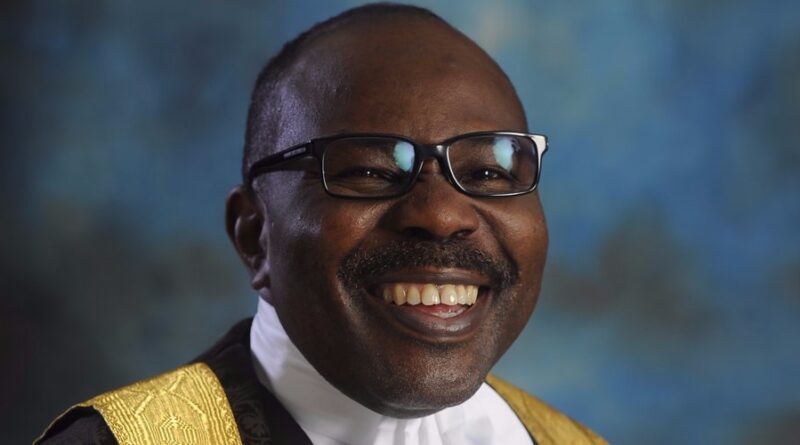
The Nestoil case and the irritants – Dr. Muiz Banire
In the last few days, there has been a coordinated social media onslaught directed at my humble self and other senior legal practitioners currently representing NestOil Limited, Neconde Energy Limited and other defendants in the suit instituted by FBNQuest Merchant Bank Limited and First Trustees Limited hereinafter referred to as the Plaintiffs. The various chambers handling the defence have been singled out for ridicule and crucifixion, not because of any proven misconduct or procedural wrongdoing, but simply by reason of the professional profiles, records, and reputations of the counsel involved.
Under ordinary circumstances, I would not have deemed it worthwhile to dignify such a publication with any response, particularly given the antecedent of its author and the nature of the medium through which the material was circulated, both of which have, over time, earned significant public disrepute. This reluctance is further reinforced by the fact that the case in question is sub judice, meaning that it is still pending before various levels of our courts and therefore deserving of restraint. However, there comes a point when prolonged silence may mislead the unsuspecting public, distort the truth, and allow fiction to settle as fact.
At such a stage, clarification becomes necessary and even morally justified. Furthermore, in our clan, if one does not narrate one’s own story and allows others to do so on his behalf, one may eventually cease to recognize his own identity in the narrative forced upon him. It therefore becomes necessary to reclaim one’s voice before mischief-makers reconfigure it beyond recognition. The author of the offending publication remains, till date, a fugitive from the law on account of similar nefarious activities carried out on behalf of third parties.
Nevertheless, because the matter before the courts remains sub judice as earlier remarked, I will refrain completely from engaging with the merits of the ongoing case or revealing issues touching on substantive arguments. My modest intervention here is restricted solely to setting the public record straight on basic procedural facts and correcting the deliberate misinformation currently being pushed into the digital space for cheap sensational gain.
For the avoidance of doubt, no substantive hearing has taken place in the matter at any level. All that has transpired thus far are ex parte orders obtained exclusively at the instance of the plaintiffs. Indeed, the only attempt to progress the substantive suit was truncated, ironically, by the same plaintiffs who initiated the action. It is evidently within the nature, strategy, and litigation culture of the plaintiffs to conduct proceedings behind the back of the opposing party, thereby denying them the opportunity to participate or even be heard.
Ordinarily, one would expect that a party who approaches a court of law to ventilate a grievance would be eager, even anxious, to prosecute the claim to conclusion. To situate the issue clearly in context, the plaintiffs filed and obtained several court orders behind NestOil, Neconde, and the other defendants. These orders, once they became known, were immediately challenged, leading to their being set aside and the case adjourned for hearing on the merit. Rather than allow the case to proceed to a proper adversarial hearing, the plaintiffs chose instead to obtain another set of ex parte orders at the Court of Appeal, again behind the defendants, and again without giving them audience.
This fresh set of orders also became the subject of challenge at the Court of Appeal. Still intimidated by the profiles and experiences of the defence legal team, the plaintiffs escalated matters by disputing the legal representation of the defendants through its purportedly appointed receiver, thereby attempting to destabilize and truncate the adversarial balance essential for a fair hearing. Again, all in a bid to remove the Counsel appointed by Nestoil and Neconde, represented respectively by my humble self for Nestoil and Chief Wole Olanipekun for Neconde.
The defendants, sensing grave danger in the persistent truncation of scheduled hearings and the continual ambush litigation strategy being deployed, proceeded to the Supreme Court to have the orders obtained behind them at the Court of Appeal suspended. Noticeably, unlike the plaintiff’s approach, the defendants did so while putting all counsel on notice.
Before the Supreme Court, the plaintiffs once again challenged the legal representation of NestOil and Neconde, and it was this controversy that the Supreme Court referred back to the Court of Appeal for resolution, while adjourning all pending applications till the 26th of January, 2026. In all of these procedural events, one must ask a simple factual question: at what point was the case ever heard by the Supreme Court or judgment rendered as the publication claims? The answer is straightforward, at no point. That, however, is not the primary focus of my intervention here; the matter remains live before the courts, and shall be so treated without further comment on the merits. What is deeply saddening and irritating is that those who engage in judicial ambush tactics now accuse innocent others of compromising the judicial process. I make bold to assert that no judge in this country can credibly claim that I have ever approached him on any matter. It is simply not within my character or professional disposition. Some of us are, in the truest sense of the expression, ministers in the temple of justice, and we parade untainted reputational credentials spanning decades.
Those who lack integrity, and whose stock-in-trade is blackmail, digital harassment, and reputational vandalism against adversaries, are the ones orchestrating this entire charade. Their pedigree is known, their modus operandi is known, and their desperation is evident to those familiar with their antecedents. They do anything to achieve their objectives, including assassinating the character and personhood of others.
God willing, nemesis will eventually catch up with them. To the gullible and unwary, a simple question suffices: if the anonymous author claims to be fighting corruption, why did he not, like Aliko Dangote once did, submit the so-called evidence to any of the anti-corruption agencies for proper investigation and prosecution? One further wonders how a purported sum of forty-two million dollars could allegedly move through Nigeria’s highly regulated banking system, whether in cash, electronic transfer, or otherwise, without any regulatory trace. To whom was the sum paid, when and where? Who are the witnesses? Except that Nigerians have been conditioned to believe the absurd, such tales would ordinarily provoke laughter.
I say boldly that I have not collected any such sum, not even a million dollars, from NestOil or from anyone for any purpose. I await any individual with evidence to the contrary to come forward. Even more troubling is the reckless circulation of such defamatory material by lawyers who ought to know better. Some appear to have forgotten that forwarding unverified defamatory content constitutes an offence under the Cybercrime Act.
A responsible lawyer ought to demand the ruling, judgment, or documentary evidence before commenting.
To demonstrate transparency, I have circulated the Supreme Court ruling which adjourned all applications to 26 January 2026 to enable the Court of Appeal resolve the legal representation issue. That is the record, nothing more and nothing less. Perhaps, the most damaging aspect of the publication is the manner in which it demeans and impugns the Supreme Court before the watching world. It is characteristic of those who operate through inducement to assume that every institution is susceptible to compromise. I suspect that the failure of the court to succumb to such tendencies is precisely what triggered the present digital mudslinging.
Our Justices have been cheapened and reduced to merchandise in the narrative of these charlatans. For the umpteenth time, I state clearly that I do not, and will never, belong to the category of those who seek to pervert justice. My reputation speaks for itself. Those who seek to damage that reputation through smear campaign of calumny, both they and their generations unborn, will reap dishonour. They shall not end well. I have always been in the forefront of the anti-corruption fight.
Those who assume that this campaign of malicious defamation will dissuade me are gravely mistaken; it has only strengthened my resolve. What we are witnessing is nothing more than another episode in the growing abuse of social media, a subject I recently interrogated in my leadership discourse on X. In the last several years, the misuse of social media platforms in Nigeria has evolved into a major national debacle. In an uncharted and largely unregulated environment, social media has, in many cases, become a weapon of mass destruction.
As in the present instance, misinformation fuels avoidable conflicts, destroys personal and institutional reputations such as in this instance, fosters public cynicism, and contributes to psychological trauma, depression, and even suicidality. This is no longer a matter to be casually waved aside under the seductive banner of free-speech absolutism. Since the administration of President Muhammadu Buhari, attempts were made to introduce a regulatory framework for social media.
The executive went as far as sponsoring a bill before the National Assembly. Criticism, emotionalism, and political distractions ensured its failure. I admit that I was among those who opposed the bill at the time, believing regulation would lead to authoritarian excess. But as time went on, many of us became serial victims of the abuses we once thought theoretical. Recall the recent harassment involving Mr. Femi Falana, SAN. As reality dawned, positions shifted. Today, some of the fiercest initial critics are strongest advocates for reasonable controls. There is hardly any civilized jurisdiction where social media operates without regulatory interface.
The notion that a nation can abandon millions of its citizens to a digital jungle without rules, controls, or accountability and still expect stability is dangerously naïve. Nigeria must build a functional regulatory architecture for the 21st century. Yes, the Cybercrimes Act provides some guardrails, but they are neither comprehensive nor contemporary. What is required is a coherent, enforceable framework that balances liberty with responsibility. Free speech, yes; but not the freedom to defame, blackmail, fabricate, intimidate, or psychologically damage fellow citizens. Enough is enough.
Regulation is not censorship; it is the precondition for preserving civil discourse, protecting reputations, and maintaining national cohesion. Social media carries enormous benefits, but in its current state of reckless abuse, it is costing the country far more than we admit. The casualties are multiplying, reputations are destroyed, and the psychological toll is widening. It is time to tame this monster before it further erodes our civic, legal, and institutional sanity. I hail the various security agencies that have taken up the challenge, particularly the Nigerian Police Force and swiftly investigating and prosecuting these abusers and irritants.
They are nothing but tools in the hands of the unscrupulous wealthy who purchase their services for meager wages. We cannot allow them destroy the brilliant efforts of the patriots who have been at the forefront of a balanced society.