
B’Odogwu Invention: CGC Highlights Transformative Impact on Nigeria’s Trade Environment
By Raheem Ibrahim
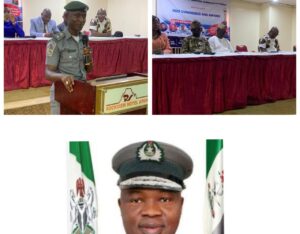
The Comptroller-General of Customs, Bashir Adewale Adeniyi, has highlighted the transformative impact of the Nigeria Customs Service’s B’Odogwu Unified Customs Management System on the country’s trade environment.
Delivering his paper at the 2025 Annual Conference and Award Ceremony of the Association of Maritime Journalists of Nigeria (AMJON), the CGC affirmed that B’Odogwu has significantly improved the efficiency and transparency of customs operations in Nigeria.
According to him, B’Odogwu has reduced clearance times, with some stakeholders completing processes within 4 to 8 hours when documentation is clean and compliant. He attributed the success to the system’s ability to integrate key processes—including Form M, PAAR, Single Goods Declaration, manifests, duty payments, and cargo release—into a single web-based platform.
The CGC also noted the system’s improved risk management capabilities, which enable the identification of low-risk and high-risk shipments. He stressed that the system allows compliant traders to enjoy faster clearance while Customs focuses attention where it is truly needed.
Adeniyi, who acknowledged that the implementation of B’Odogwu had not been without challenges—including delays in transmitting SONCAP certificates and intermittent system slowdowns—added that the NCS had addressed these issues through continuous upgrades, stakeholder engagement, and ongoing training.
He, however, urged maritime journalists to play a crucial role in promoting the understanding and adoption of B’Odogwu, emphasising the importance of accurate interpretation and reporting of the system’s benefits and challenges.
Adeniyi expressed confidence that B’Odogwu would continue to transform Nigeria’s trade environment, making it faster, more transparent, and aligned with global standards. He thanked stakeholders for their support and cooperation in implementing the system.
Earlier, AMJON, through its Acting President, Vera Osokpo, in her welcome address, called for renewed national commitment to fully harness Nigeria’s blue economy potential, describing the sector as a critical pathway to economic diversification, export growth, and improved multimodal cargo transport.
Speaking at the event, which had the theme “Harnessing Nigeria’s Blue Economy Potentials, Boosting Export Trade, and Multimodal Cargo Transport”, the Acting President emphasised that despite Nigeria’s expansive coastline, rich marine resources, and strategic geographic position, the country remains overly dependent on oil exports.
She stressed that the blue economy—covering shipping, fisheries, coastal tourism, offshore energy, aquaculture, marine biotechnology, and other emerging sectors—holds the potential to transform Nigeria’s economic landscape if adequately leveraged.
Osokpo noted that as the global blue economy is projected to reach $2.5 trillion by 2030, Nigeria “cannot afford to be left behind,” urging policymakers and industry players to deepen innovation, investment, and collaboration.