FG Moves to Unlock Livestock Potential, Drive Economic Growth and Food Security
The Federal Government has reiterated its determination to unlock Nigeria’s vast livestock potential and position the sector as a primary driver of economic growth, innovation and food security.
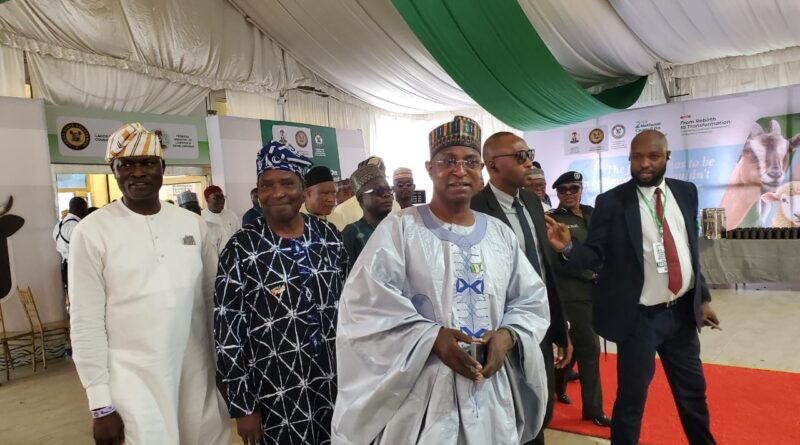
The declaration was made at the second National Council Meeting on Livestock Development held in Lagos.
The Permanent Secretary of the Federal Ministry of Livestock Development, Dr. Chinyere Ijeoma Akujobi, represented by Peter Alike, noted that while Nigeria is richly endowed with livestock resources, entrepreneurial farmers, indigenous knowledge and a rapidly growing market for animal-source foods, the nation has yet to fully translate these advantages into tangible economic gains.
He attributed this gap to impaired productivity, low competitiveness and underdeveloped value chains, alongside persistent bottlenecks such as inadequate infrastructure, limited access to improved breeds, animal diseases, and feed and fodder shortages.
Alike urged stakeholders not to let these longstanding challenges deter their progress, calling instead for a decisive shift from fragmented interventions to coordinated national action. He emphasised that the Council must transcend its role as a routine annual statutory gathering and function as a dynamic national platform for building consensus, resolving policy constraints and strengthening intergovernmental collaboration.
Speaking on the gathering’s theme, “From Rebirth to Transformation: Advancing Livestock Development for National Prosperity,” he called on delegates to ensure that all memoranda deliberated upon align strictly with the National Livestock Growth Acceleration Strategy.
Achieving this vision, he explained, requires deliberate, targeted investments in improved animal genetics, sustainable feed production and critical sector infrastructure.
In a direct appeal to state commissioners and government representatives, Alike urged them to leverage the Council to fortify livestock institutions and programmes within their respective jurisdictions.
Reaffirming the Federal Ministry’s commitment to capacity building and resource mobilisation, he charged delegates to approach their deliberations with patriotism, mutual respect and the boldness required to implement lasting, innovative solutions for national prosperity.
The Chairman of the House of Representatives Committee on Livestock Development, Mr. Wale Raji, in his remarks, called on the Federal Ministry of Livestock Development to urgently translate its policy frameworks into tangible economic benefits for Nigerians.
Speaking on the theme, “From Rebirth to Transformation: Advancing Livestock Development for National Prosperity,” he emphasised that while foundational strides have been made, citizens are anxiously awaiting visible improvements in their livelihoods and national food security.
Raji noted that the establishment of the ministry in 2024 was a bold milestone aimed at repositioning the sector as a major driver of employment and economic growth. Since its inception, dedicated livestock institutions have expanded from just three states to 20 as of August 2026, reflecting stronger state-level commitment and federal collaboration.
He also highlighted the National Livestock Growth Acceleration Strategy, which ambitiously targets growing the sector’s economic contribution from $32 billion to at least $74 billion by 2035.
In his address, the President of the Veterinary Council of Nigeria, Prof. Matthew Adamu, said the theme, “From Rebirth to Transformation: Advancing Livestock Development for National Prosperity,” reflected both the opportunities before the country and, more importantly, the collective responsibility to harness them.
He said Nigeria’s livestock sector was at a defining moment, noting that for decades, livestock production had remained an important component of the agricultural economy, supporting millions of livelihoods, providing animal-source foods, supplying raw materials to industries and sustaining commercial activities across the country.
He, however, noted that despite its enormous potential, the sector had yet to achieve the level of productivity, competitiveness and industrial development that its natural and human resources should permit.
Adamu questioned when the country would move beyond repeatedly talking about the sector’s potential to harnessing it and converting it into productivity.
He said stakeholders had gathered not merely to discuss livestock development but also to consider how to translate renewed government attention, institutional reforms, investment and stakeholder commitments into measurable and sustainable national progress.
Also speaking, the Special Adviser to the Lagos State Governor on Agriculture and Food Systems, Dr. Oluwarotimi Fashola, disclosed that the forum demonstrated the priority the Federal Government had placed on livestock development, adding that Lagos remained the largest market in the West African sub-region.
According to him, the state government was also committed to scaling up the value chain in livestock production in furtherance of food security and the overall well-being of its citizens.
While commending the decision to set up various committees for further deliberations on the Council, Fashola charged every participating state to adopt the minister’s speech as a working document in developing the sector to its full potential.