
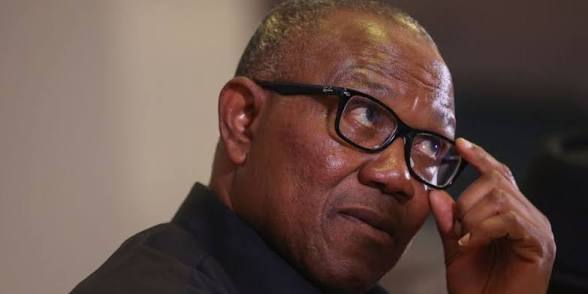
DGGWI BERATES PETER OBI OVER CALL FOR NON-REMITTANCE OF MONEY, SAYS POSITION IS IRRESPONSIBLE, PROVOCATIVE, ECONOMICALLY DANGEROUS AND CONDEMNABLE
Group cites the global importance of remittances, warns against irresponsible political and inciting statements that could undermine families fabric, assault human sensibilities and hurt local economies, advises Obi to acquire an understanding of family relationships and economics before seeking to govern Nigeria
A Coalition of Civil Society Organizations, the Democracy and Good Governance Watch Initiative (DGGWI) has strongly criticized Mr. Peter Obi over his reported call for non-remittance of money by Nigerians in the Diaspora, describing the position as irresponsible, reckless, provocative, evidence of economic and emotional ignorance, economically dangerous and capable of undermining lawful financial obligations.
In a statement issued in Lagos, the leaders of the organisation, expressed sadness that a former governor and presidential candidate, who ought to appreciate the complexities of public finance and economic governance can make such a call all in the name of political expediency which speaks volumes of his detachment from family bonding, political desperation and frustration which is condemnable in it’s entirety.
According to DGGWI, political desperation should never become a vehicle for reckless, insensitive, inciting statements that could undermine lawful financial obligations, destroy family ties and jeopardize the economic welfare of family members for whom the financial obligations is due as well as a threat to national security.
The organisation stressed that constructive opposition is an essential component of democracy, but opposition must be guided by mental health stability, sound economic reasoning, responsible public communication and a clear understanding of the consequences of political desperation induced utterances.
DGGWI noted that international remittances have become a major source of financial support for millions of households worldwide and a significant contributor to economic activity in many developing countries.
According to the World Bank’s Migration and Development Brief 40, global remittance flows to low- and middle-income countries reached an estimated US$656 billion in 2023. The Bank subsequently estimated that these flows rose to approximately US$685 billion in 2024. These figures demonstrate the enormous importance of money transfers to household welfare and economic stability.
Diaspora Remittances help families pay school fees, meet healthcare expenses, purchase food, secure accommodation, establish small businesses and cope with unexpected financial emergencies. They also stimulate local commerce because money received by households is often spent within their communities, supporting traders, transport operators, artisans, service providers and other small businesses.
For Nigeria, remittances from citizens living and working abroad are particularly important. They supplement household incomes, provide foreign exchange, support education and healthcare, finance entrepreneurial activities and help families withstand economic hardship.
DGGWI emphasised, however, that international personal remittances must be distinguished from statutory revenue remittances and other funds legally due to government institutions. Although these are different categories of financial transfers, both illustrate why responsible money management, compliance with applicable laws and a clear understanding of financial systems are indispensable to economic governance.
The organisation warned that any indiscriminate call for the non-remittance of money, without a clear explanation of the type of funds involved, the applicable legal framework and the likely consequences, risks misleading the public and creating unnecessary economic uncertainty.
The group further observed that Mr. Obi’s reported advice to Nigerians in the United Kingdom to stop sending money to relatives who request financial assistance raises serious questions about his understanding of the realities of household economics, social welfare and the informal support systems sustaining millions of families all over the world.
DGGWI acknowledged that Nigerians haveevery right to demand accountable leadership, responsible public spending and an economy that offers citizens decent employment and sustainable livelihoods. However, the organisation argued that an irresponsible call of political desperation to Nigerians abroad to withhold assistance from family members is an expression of lack of respect for family values, their well-being as well as the economic prosperity of the country.
The group noted that millions of Nigerian households depend on relatives abroad to pay school fees, purchase medicines, feed their children, support elderly parents and meet other essential needs. For many families, such assistance is not a luxury but a lifeline in an economy where unemployment, inflation and inadequate social protection have placed enormous pressure on household incomes.
“Economic hardship should not be compounded by political rhetoric that could question family support without providing a viable alternative. The answer to poverty is not to abandon vulnerable relatives but to create an economy in which families can earn sufficient incomes, businesses can thrive and citizens can live with dignity,” the statement said.
DGGWI maintained that there is no alternative to Diaspora remittances because it’s a global economic lifeline and boosters to a country’s economic index.
The organisation advised Mr. Obi to reconsider his approach to politics and acquire emotional intelligence and a proper understanding of economic and social realities before presenting himself as an alternative for Nigeria’s leadership.
According to DGGWI, the ability to criticize or make economic prescriptions does not automatically translate into the competence required to manage a complex national economy.
Presidential leadership demands mental health alertness with comprehensive understanding of family and public finance, monetary and fiscal policy, trade, investment, employment, social protection, industrial development and the interconnected nature of domestic and international economic activities.
The group asked Mr. Obi to explain how his position would protect vulnerable households, strengthen family bond, stimulate local economic activity and address the underlying causes of poverty rather than merely urging Nigerians abroad to reject requests for financial assistance from family members.
“If Mr. Obi believes that his political message is the solution to Nigeria’s economic problems, he owes Nigerians a convincing explanation of how that message will translateinto jobs, affordable food, accessible healthcare, quality education and improved living standards.
“Leadership is not about making irresponsible and provocative statements to win political applause. It is about understanding the problems of the people, offering workable solutions and accepting responsibility for the consequences of one’s proposals,” the group stated.
DGGWI added that Mr. Obi should concentrate on developing and articulating credible economic policies rather than making reckless and provocative pronouncements that has the tendency to threaten the family bond between Nigerians who depend on the generosity of family members abroad.
The organisation also challenged him to move beyond political slogans and demonstrate how his proposed economic direction would deliver measurable improvements in household welfare, productivity, investment and national development.
DGGWI called on political leaders, presidential aspirants and public commentators to exercise restraint when addressing issues that directly affect the survival of ordinary citizens.
The group stressed that Diaspora Nigerians have the inalienable and fundamental right to decide how to use their hard-earned income, including whether and how much assistance to provide to relatives. Nevertheless, political leaders should distinguish between encouraging financial accountability and promoting a blanket withdrawal of support from vulnerable family members.
The organisation urged Nigerians in the Diaspora to continue making informed personal decisions about financial assistance while demanding accountability from elected officials and supporting policies that promote self-reliance, productive employment and economic prosperity.
Thank you.
Yours Sincerely,
E-SIGNED:
Gbenga Soloki
Nelson Ekujumi
Michael Popoola Ajayi