
Ray Ekpu: We’ve Given Up on Justice for Dele Giwa’s Murder
Forty years after the gruesome murder of journalist and Newswatch Editor-in-Chief, Chief Dele Giwa, veteran journalist, Mr. Ray Ekpu, says the media community has given up on its quest for justice over the killing.
Ekpu, however, said he believes that God, who is above all men, would ultimately deliver justice to those responsible for the death of the renowned journalist.
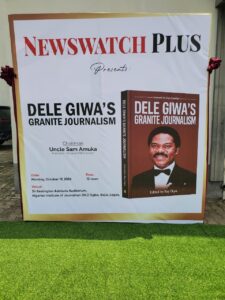
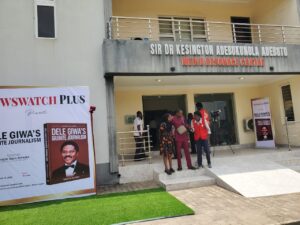
He spoke at the presentation of the book, Dele Giwa’s Granite Journalism, held to mark the 40th anniversary of Giwa’s death at the Sir Kensington Adebutu Media Resource Centre, Nigerian Institute of Journalism (NIJ), Ogba, Lagos.
According to Ekpu, the late legal luminary, Chief Gani Fawehinmi, and members of the media community were relentless in their efforts to secure justice for Giwa, but their efforts yielded no result because of the powerful forces allegedly behind the killing.
He described October 19, 1986, as one of the darkest days in the history of journalism, saying the profession exposes practitioners to enormous dangers.
Ekpu urged journalists to continue to speak the truth despite the risks, stressing that the media has a crucial role to play in steering society in the right direction.
He expressed concern that journalists who tell the truth are often left unprotected, but said the quest for a better Nigeria must continue.
Describing Giwa as his bosom friend, colleague and a legend who mastered the use of the pen, Ekpu said his death “turned the day into night” and plunged the journalism community into grief.
He said the gathering was not organised to mourn Giwa but to honour his legacy, “give presence to his absence” and immortalise his contributions to journalism.
Ekpu said the book contains some of Giwa’s articles published in the Daily Times, Concord and Newswatch, as well as some of his radio interviews, describing its quality as unique.
Also speaking, the Publisher of Vanguard Newspaper, Uncle Sam Amuka, urged media practitioners at the gathering to live lives worthy of emulation.
Amuka maintained that genuine protests could yield positive results when they were directed at making legitimate demands from government. He cited the EndSARS protest and the suspension of toll collection at the Lekki Toll Gate as one of its gains.
The 91-year-old media veteran expressed sadness that Giwa’s life was brutally cut short at the age of 39 and recommended the book to members of the public beyond the journalism profession.
Former Ogun State Governor, Aremo Olusegun Osoba, also recalled that Giwa had a premonition of his death.
Osoba said that on Saturday, October 18, 1986, after a session in Victoria Island, Giwa complained that some people were after him.
He said he subsequently led Giwa and others to meet the then Chief of General Staff, Rear Admiral Augustus Aikhomu, to present the matter, adding that Aikhomu promised to look into it.
Osoba said he woke up about 18 hours later to receive the news of the attack on Giwa.
He challenged journalists to strive for excellence in their profession, noting that Giwa was highly intellectual and distinguished himself through his journalism.
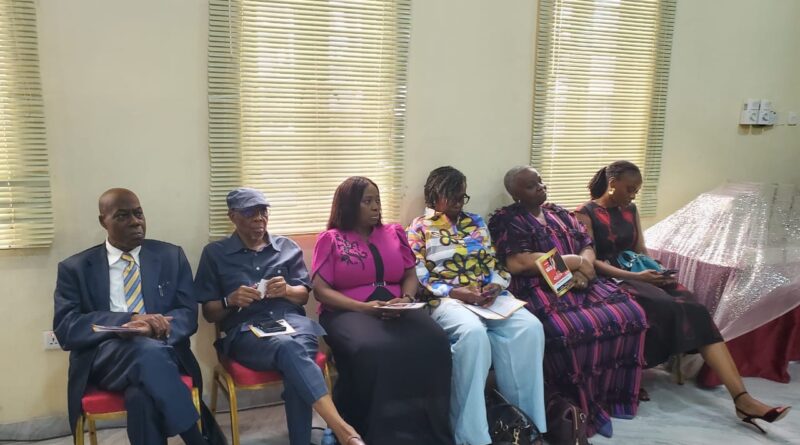
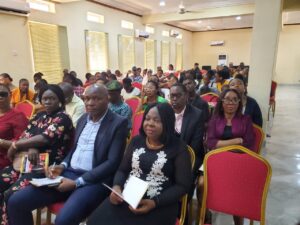
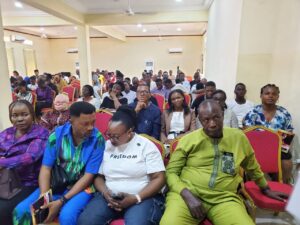
The event was attended by Giwa’s widow, his daughters, Funmi and Aishat, as well as professional colleagues, friends and family members.


