Young Innovator Unveils Homegrown Technologies to Transform Africa’s Coconut Value Chain
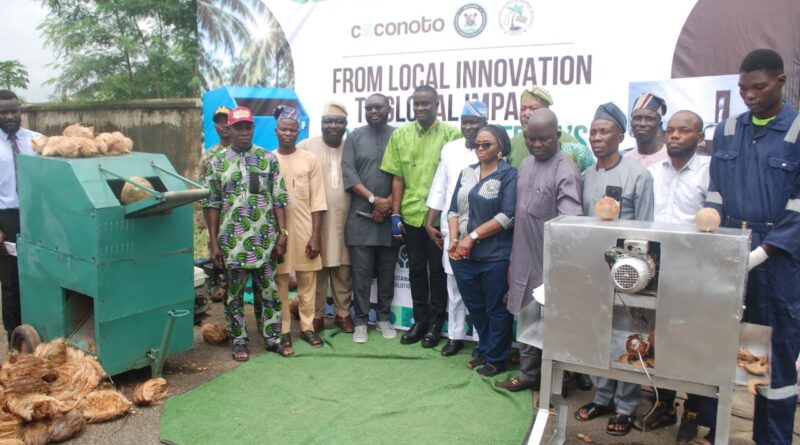
The Founder and Chief Executive Officer of Coconoto Limited, Jacob Oluwayanmife Abiodun, has unveiled a range of locally fabricated coconut processing technologies aimed at transforming Africa’s coconut value chain, creating jobs and promoting sustainable industrial development.
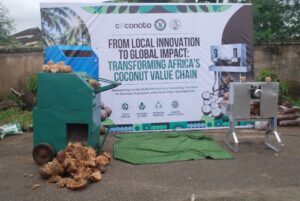
Speaking at an exhibition themed, “From Local Innovation to Global Impact: Transforming Africa’s Coconut Value Chain,” Abiodun said the initiative was inspired by the need to make coconut processing safer, easier and more profitable for farmers across the continent.
He recalled that the idea for Coconoto Limited emerged during his final year engineering project at the Federal University of Technology, Akure, where field research exposed him to the hazardous and inefficient methods used by coconut farmers to dehusk coconuts.
According to him, the research also revealed that coconut husks, often discarded as waste, hold enormous economic potential that could drive industrial growth and environmental sustainability.
Abiodun expressed gratitude to several individuals who contributed to the company’s growth, including Mr. Opeyemi Olopade, who financed his first coconut dehusking machine as a final year project, Hon. Tunde Hunpaiti, Baba Ogungbe of the Coconut Growers Association for supporting the research, and Mr. Mathew Semasa for supplying coconut husks from Badagry.
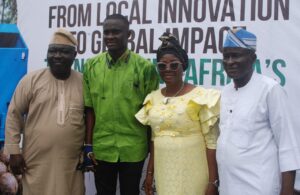
He explained that while the company initially focused on solving the challenge of coconut dehusking, it later expanded its vision after discovering wider opportunities across the coconut value chain, including mechanisation, waste management, sustainable agriculture, manufacturing and market access.
The entrepreneur said Coconoto has developed locally fabricated technologies that convert coconut waste into value added products such as cocopeat, cocofibre and biodegradable planting materials, noting that the company has processed more than 15 tonnes of coconut husks within its first year of operation.
He described the initiative as a practical demonstration of the circular economy, climate action, job creation and import substitution through locally developed solutions.
Abiodun also recounted surviving a major setback in 2024 when he suffered a severe accident that crushed his right hand, leading to multiple surgeries and months of rehabilitation.
He said the experience strengthened his resolve, explaining that the recovery period was used to redesign and improve the company’s technologies rather than abandon the project.
Highlighting the untapped opportunities within Africa’s coconut industry, he said millions of coconut husks are still treated as waste despite the continent’s capacity to produce products that are currently imported.
He urged stakeholders to support local innovation to unlock multiple income streams from coconut production, empower young people and women, strengthen local industries and position Africa as a global exporter of coconut based technologies and products.
Abiodun reiterated Coconoto Limited’s commitment to building an integrated ecosystem that leverages innovation to transform the continent’s coconut value chain while contributing to sustainable economic development.