Echoes Of Venezuela: Nigeria Braces For Economic Turmoil
By Dakuku Peterside
Last week, I attended a birthday celebration hosted by a friend in the oil and gas sector, with guests deeply involved in Nigeria’s petroleum industry: former colleagues, industry experts, and executives monitoring global markets.
However, despite the festive setting, one topic dominated the conversations: Venezuela.
Not the Venezuela of beaches and beauty, but the Venezuela facing upheaval—where oil dependence, poor planning, and external shocks brought economic distress. My peers debated what this might mean for Nigeria: for our contracts, shipments, and forecasts. The conversation circled around hedges and risk. But to me, the lesson from Venezuela is urgent: what does this impending volatility mean for ordinary Nigerians?
What does this mean for ordinary Nigerians?
When oil markets face problems, ordinary Nigerians feel it most directly. Leadership failures or misplaced optimism results in real costs to families, including difficulties affording food, long queues for transportation, hospital shortages, and growing struggles to pay school fees. These economic consequences reach daily life, not just government statements.
In that moment, Venezuela’s story felt like an urgent example of crisis in leadership, echoing the heart of my latest book. Crises rarely sound alarms. They appear as distant rumbles, a headline that looks far off, a diplomatic spark we feel is not our own. Then, all at once, the threat is close: the exchange rate, the price of bread, a lost job offer, a budget unraveling before our eyes.
Until recently, Nigeria ended the year with cautious optimism, which showed in the numbers. At least fourteen states, including Akwa Ibom, Kano, Gombe, Bayelsa, Edo, Sokoto, Delta, Osun, Enugu, Imo, Ogun, Abia, Rivers, and Lagos, planned budgets above one trillion naira, many for the first time. Nationally, the 2026 budget rose to N58.18 trillion, based on a crude oil price of $64.85 per barrel and a production target of about 1.84 million barrels per day— about 672 to 673 million barrels for the year—expected to bring in around $40.6 billion before deductions.
Even when the National Assembly suggested lowering the benchmark to $60 per barrel, it still assumed that oil prices would remain stable.
But since January 3, 2026, Venezuela has loomed as a warning for Nigeria. The real issue is not academic debate—it is that Nigeria is too comfortable planning on best- case scenarios, even as Venezuela’s story shows us the costs of complacency.
Recent reports suggest oil prices could fall to $50 per barrel. If that happens, it is a national test of whether we can keep salaries paid, public projects on track, and borrowing under control. A drop from $64.85 to $50 could create a $10.24 billion gap. This shortfall means direct impacts: delayed government salaries, stalled infrastructure, and higher debt costs that can slow economic activity for everyone.
And borrowing is no small matter when debt servicing alone is projected at around N15.52 trillion, and the fiscal deficit sits at about N23.85 trillion—a gap that already stretches credibility. Add to that the government’s own admission that it recorded a significant revenue shortfall in 2025, and you begin to see why Venezuela is not “their problem.” It is a mirror held up to our fragility.
To grasp the stakes, we must turn these numbers into lived pain.
A weakening oil market means fewer dollars flow into Nigeria’s foreign exchange system, putting more pressure on the naira. For most people, this currency decline means their money buys less—prices rise across markets, essential goods like food and medicine become more expensive, and school fees increase. The economic impact reaches daily routines and necessities.
In Nigeria, inflation is not just a number. It is a slow, ongoing hardship.
When families must choose between fuel and food, or face higher transportation costs, many cut back on visits, delay opportunities, and lower spending. These economic pressures don’t just reduce consumption; they also shrink hopes for better prospects, as hardship becomes a barrier to growth and ambition.
Then comes the second blow— one that can land harder and more suddenly: investment.
Global capital is famously unromantic. It does not fall in love with countries; it falls in love with risk-adjusted returns. If Venezuela becomes “derisked”—if sanctions ease, if compliance risks fall, if Western service providers and insurers regain comfort—capital will move. Not because investors are wicked, but because that is what capital does: it runs toward clarity.
And if capital runs to Venezuela, it will not send Nigeria a sympathy note. It will simply leave us with fewer options.
That matters because foreign investment is not only about balance-of-payment comfort. It is about jobs. It is about projects that create livelihoods beyond government payrolls. If the private sector pauses expansions and tightens hiring, the consequences land first on young Nigerians who are already negotiating adulthood in an economy that treats employment like a privilege.
Even government spending, often a key economic driver, will shrink under pressure. Ministry cutbacks don’t just affect contractors but also artisans, food vendors, transporters, and small businesses. Each delayed payment directly reduces income and spending, creating a chain effect throughout the local economy.
And all of this is happening while Nigeria’s oil sector already faces problems such as underinvestment, theft, vandalism, inefficiency, and declining output from older fields. We have struggled to meet production targets even before outside problems appear. The bigger risk is not just falling oil prices, but that we are making plans based on hope while our foundation is weak. Why the talk at the birthday party unsettled me. Not because industry professionals are wrong to worry about their margins, but because we often postpone the national conversation until pain forces it. We perform optimism as though it can substitute for planning.
And here is the political complication no one can afford to ignore: 2027.
As elections approach, fiscal pressures typically rise. Demand for foreign exchange intensifies. Government spending becomes more politically charged. The temptation to postpone hard decisions increases, and the instinct to promise more than we can deliver becomes stronger. In such a season, the country needs discipline most, but discipline is often the first casualty of politics.
So, what does ‘leading in a storm’ require now—before the storm becomes a flood?
It requires conservative budgeting. In a global oil market where supply dynamics can shift overnight, prudence is not pessimism. It is governance. When the world is volatile, best-case assumptions become a form of self-harm.
It requires speed with truth. Citizens can endure hard realities better than they can endure surprise. Markets, too, respond more kindly to honest adjustment than to denial dressed as confidence.
It requires protecting the vulnerable. If inflation rises, policy must treat social stability as an economic asset. A nation that allows hardship to become humiliation invites unrest.
It requires intelligent, non-oil revenue, not punitive measures. Tax reform may be necessary, but reforms that arrive without visible public value will feel like punishment. People will comply more when they can see how the government is using what it already collects.
It requires value addition—the courage to break the absurd cycle of exporting crude and importing refined products at a higher cost. When foreign exchange is scarce, the logic of domestic processing becomes not just economic, but strategic. If we insist on living as a crude-exporting economy in a world of refining and petrochemicals, we will keep importing vulnerability.
And most crucially, it requires unwavering seriousness—the kind that rejects wishful thinking before disaster strikes. The kind that refuses to mistake optimism for a plan, or prayer for policy.
That night, as the celebration went on, I noticed the same thing happening: people kept bringing up Venezuela, looking for signs of trouble ahead. It reminded me that national crises do not start in Abuja. They often begin far away—in places we do not control, through decisions we did not make, and in markets that do not care about our feelings.
But the difference between countries that survive crises and those that collapse is not luck. It is preparation.
Echoes are ever just sounds— they are urgent warnings.
Nigeria does not have to become Venezuela. But if we fail to learn from Venezuela—if we ignore the dangers of overdependence, let politics outrun economics, and build life on a single commodity—we risk suffering the same sudden collapse when institutions fail to anticipate or act.
In the end, this is not a story about barrels and benchmarks, or even about superpowers flexing strength. It is a story about the quiet violence of economic instability— the way it enters homes without breaking doors and rearranges lives without announcing itself.
And it is a story about whether our leaders will think early enough, act boldly enough, and govern honestly enough—while the warning is still an echo, and not yet the full roar of the storm.
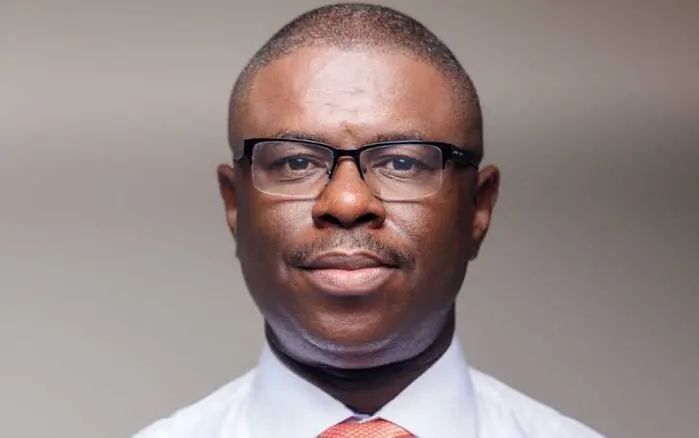
*Dakuku Peterside is the author of two best-selling books, Leading in a Storm and Beneath the Surface.