𝐖𝐡𝐚𝐭 𝐖𝐞 𝐒𝐞𝐞𝐤 𝐢𝐧 𝐒𝐨𝐤𝐨𝐭𝐨 𝐈𝐬 𝐀𝐥𝐫𝐞𝐚𝐝𝐲 𝐢𝐧 𝐎𝐮𝐫 𝐏𝐨𝐜𝐤𝐞𝐭
𝐀𝐝𝐚𝐦𝐮 𝐎𝐫𝐢𝐬𝐚, 𝐄𝐲𝐨, 𝐚𝐧𝐝 𝐭𝐡𝐞 𝐃𝐚𝐲 𝐋𝐚𝐠𝐨𝐬 𝐇𝐨𝐧𝐨𝐮𝐫𝐞𝐝 𝐈𝐭𝐬 𝐀𝐧𝐜𝐞𝐬𝐭𝐨𝐫𝐬.
𝐵𝑦: ‘𝑑𝑎𝑦𝑜 𝐴𝑑𝑒𝑑𝑎𝑦𝑜
“Ṅkan tí à ńwá lọ Ṣókótó, wá ní àpo ṣòkòtò.”
𝐖𝐡𝐚𝐭 𝐰𝐞 𝐣𝐨𝐮𝐫𝐧𝐞𝐲 𝐟𝐚𝐫 𝐭𝐨 𝐬𝐞𝐞𝐤 𝐢𝐬 𝐚𝐥𝐫𝐞𝐚𝐝𝐲 𝐢𝐧 𝐨𝐮𝐫 𝐩𝐨𝐜𝐤𝐞𝐭.
This proverb framed my thoughts as I stood on the historic grounds of Tafawa Balewa Square, Lagos Island, on the 27th day of December, in the year of our Lord 2025. It is not a saying of complacency; it is a declaration of abundance. It reminds us that Nigeria already possesses what many nations are searching for, culture, history, creativity, resilience, and identity. We have no business chasing what is not lost.
To be among the photographers documenting the Adamu Orisa Play, staged this year to honour departed pillars of Lagos and Nigeria, is an honour that will remain etched in my memory. This was not merely an event. It was a ritual of remembrance, a civic thanksgiving, and a cultural homecoming.
I arrived at TBS the night before and stayed until about 2 a.m., walking the grounds in quiet contemplation, studying angles, anticipating movement, imagining light. I wanted to know where history would best reveal itself through my lens.
That night, providence placed Mr. Seni Makanjuola, one of the engine rooms of the Lagos State Ministry of Culture, Tourism and Arts, in my path. With warmth and efficiency, he ensured my crew and I received our passes. In moments like that, one is reminded that culture survives not only through spectacle, but through the diligence of those who quietly sustain it.
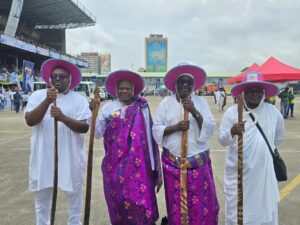
By 9 a.m., I was back at TBS. Even then, Lagos had already announced herself. Roads were jam-parked, and I walked from Independence Bridge to the Square, camera in hand, spirit light.
Security was firm and reassuring. Military men and police officers were stationed everywhere, ensuring safety for the general public and for the President of the Federal Republic of Nigeria, President Bola Ahmed Tinubu, GCFR. Access was smooth. Order prevailed. And then I saw the stands. They were nearly full. I paused, not in surprise, but in awe. Lagosians had come out in their numbers. Culture had called, and the people had answered.

The Yoruba say, “Ìròhìn kì í tó àfọ̀jú bá.” 𝐍𝐨 𝐞𝐱𝐩𝐥𝐚𝐧𝐚𝐭𝐢𝐨𝐧 𝐞𝐪𝐮𝐚𝐥𝐬 𝐰𝐡𝐚𝐭 𝐭𝐡𝐞 𝐞𝐲𝐞𝐬 𝐦𝐮𝐬𝐭 𝐰𝐢𝐭𝐧𝐞𝐬𝐬.
I plunged into work immediately. My intention was clear: to produce a book on the Adamu Orisa Play, its history, its meaning, and its place in the evolving story of Lagos.
As I moved around the stands, Lagos revealed herself fully. Men and women dressed in splendid Yoruba attire, aso-oke, adire, lace, damask, paired with elegant sunshades, carefully chosen shoes, and matching bags. It was colour upon colour. Confidence upon confidence.
𝐓𝐫𝐮𝐥𝐲, 𝐄𝐤𝐨 𝐢𝐬 𝐟𝐨𝐫 𝐬𝐡𝐨𝐰.
To understand the Adamu Orisa Play is to journey into the spiritual and historical heart of Lagos.
Adamu Orisa predates its modern staging by centuries. Oral tradition situates its first formal performances in mid-19th-century Lagos, during the era of early Obas such as Oba Akitoye and Oba Dosunmu. This was a period of profound transition, political, spiritual, and social.
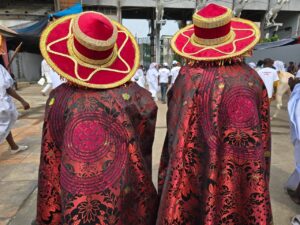
Adamu Orisa emerged as a sacred ritual performance, created to honour the passing of revered leaders and elders whose lives shaped the moral and civic order of Lagos. It was conceived not as entertainment, but as a rite of passage, a way of guiding the departed into the ancestral realm while restoring balance among the living.
In its earliest form, Adamu Orisa was community-bound. It took place within palace courtyards and sacred routes on Lagos Island. Participation was restricted, movements were deliberate, and symbolism was paramount. Every chant, step, and costume carried encoded meaning.
From this ritual soil grew one of Lagos’ most enduring cultural institutions.
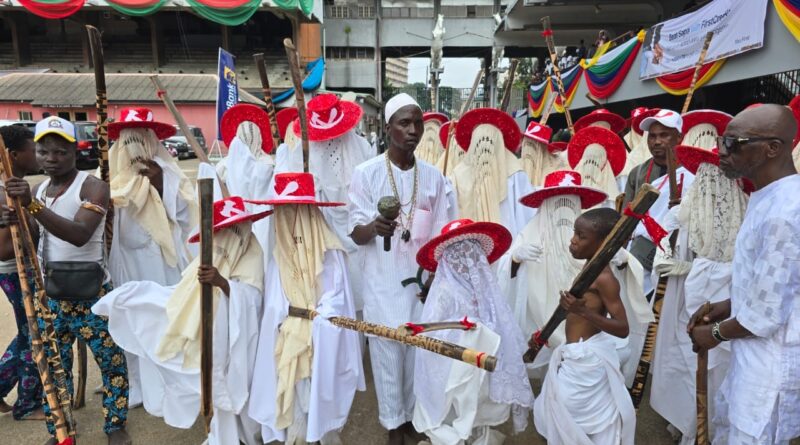
From Adamu Orisa emerged Eyo, not merely a masquerade, but a living philosophy. Clad in flowing white robes (agbada funfun), wide-brimmed hats (àkètè), and carrying the sacred òpá bàtà, the Eyo represents transition, from life to ancestry, from silence to continuity, from the visible to the unseen.
Historically, Eyo festivals were performed to:
Honour the death of an Oba of Lagos, commemorate the passing of distinguished chiefs, and prepare the spiritual ground for the installation of a new Oba.
Eyo is authority in motion. Tradition demands reverence. Footwear must be removed, and the òpá bàtà enforces respect without words.
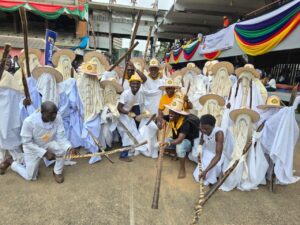
Over time, the institution became structured into recognised groups with defined lineage and roles.
The five principal Eyo groups traditionally recognised are:
Eyo Adimu, the most sacred authority
Eyo Laba (Agere), the path-opener
Eyo Oniko, guardian of discipline
Eyo Ologede, symbol of fertility and continuity
Eyo Agere, reflecting the fluidity of oral tradition
In contemporary Lagos, additional recognised groups, including Eyo Elemoro, identified by its pink hat, participate under strict traditional regulation.
Today, there are over seven registered and traditionally recognised Eyo groups, their legitimacy rooted in lineage, history, and ritual continuity.
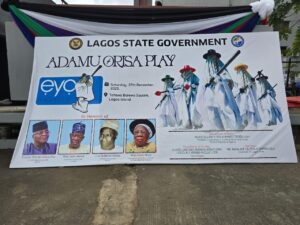
The 2025 Adamu Orisa Play carried profound significance. It was staged to honour towering figures in Lagos’ political and social history, all now ancestors:
Mobolaji Johnson, the first Military Governor of Lagos State
Alhaji Lateef Kayode Jakande, the first civilian Governor of Lagos State
Chief Michael Otedola, former Governor of Lagos State
Alhaja Abibatu Mogaji, Iya Oloja General and mother of President Bola Ahmed Tinubu
These were not ordinary names. They were builders of modern Lagos, figures whose lives shaped governance, commerce, and the soul of the city. To honour them through Adamu Orisa was to acknowledge that leadership, too, must pass through ritual remembrance.
What made the 2025 Adamu Orisa Play extraordinary was its intentional relocation, from sacred inner spaces to the civic grandeur of Tafawa Balewa Square. This was not dilution. It was declaration. By situating Adamu Orisa within Detty December, Governor Babajide Olusola Sanwo-Olu affirmed that culture is not frozen in time. It can breathe, evolve, and still remain sacred.
One Eyo group followed another, measured steps, chanting voices, ancestral authority unfolding before tens of thousands. Old and young alike eagerly sought photographs with the Eyos as they completed their parade.
Behind the splendour were tireless hands: the Chief of Staff, to Mr Governor, Mr. Tayo Ayinde present early to ensure order; Mrs. Toke Benson-Awoyinka, who stayed until after 1 a.m.;
Mr. Idris Aregbe, whom I left at 2 a.m. and met again at 9 a.m., having departed only at 6 a.m.
Culture does not happen by accident. It happens because some people refuse to sleep.
As I prepared to leave, I turned back and looked at the crowd. I saw pride. I saw belonging. I saw hope.
Lagos is blessed.
Nigeria is blessed.
𝐖𝐢𝐭𝐡 𝐞𝐯𝐞𝐫𝐲𝐭𝐡𝐢𝐧𝐠 𝐰𝐞 𝐚𝐥𝐫𝐞𝐚𝐝𝐲 𝐩𝐨𝐬𝐬𝐞𝐬𝐬, 𝐡𝐢𝐬𝐭𝐨𝐫𝐲, 𝐜𝐮𝐥𝐭𝐮𝐫𝐞, 𝐜𝐫𝐞𝐚𝐭𝐢𝐯𝐢𝐭𝐲, 𝐰𝐞 𝐭𝐫𝐮𝐥𝐲 𝐡𝐚𝐯𝐞 𝐧𝐨 𝐛𝐮𝐬𝐢𝐧𝐞𝐬𝐬 𝐬𝐞𝐚𝐫𝐜𝐡𝐢𝐧𝐠 𝐟𝐨𝐫 𝐰𝐡𝐚𝐭 𝐢𝐬 𝐧𝐨𝐭 𝐥𝐨𝐬𝐭.
May Lagos continue to rise, a city where culture is preserved, celebrated, and rewarded.
May Nigeria remember herself, confident, just, and prosperous.
May those who lead us be granted wisdom beyond politics, vision beyond today, and courage beyond fear.
May Governor Babajide Olusola Sanwo-Olu be strengthened to do more, to do better, and to leave legacies that time itself will applaud.
And may we, the witnesses and chroniclers, never grow tired of believing that Nigeria will be better, not someday, but in our lifetime.