Free Data for Learning: Nigeria’s Most Urgent Digital Bet
By Idris Olorunnimbe
There is a moment in every generation when a country gets the chance to make a decision that reshapes the trajectory of millions of lives. Nigeria is at that moment now, and the decision is simpler than most people think.
Zero-rate educational websites. Make learning data-free. Let’s do it now.
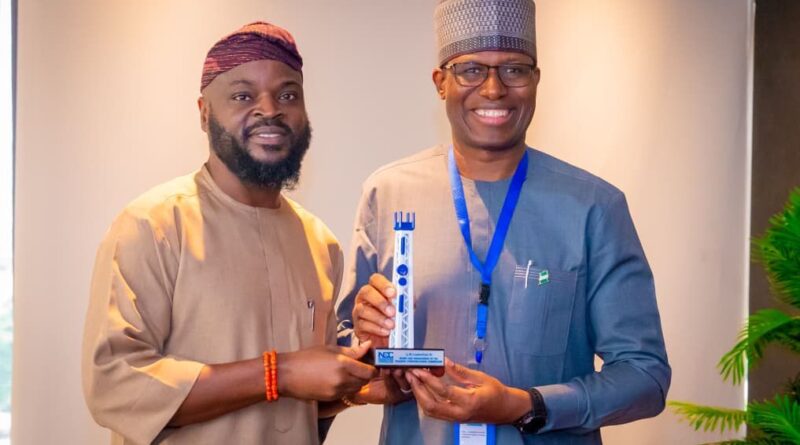
When ALTON paid me a courtesy visit recently at the NCC’s Ikoyi office, I used the occasion to issue a clear charge: telecom operators must prioritise the zero-rating of credible educational platforms as a near-term, high-impact intervention. The response was encouraging. But encouragement is a starting point. What Nigeria needs is coordinated action across government, regulators, operators, and state houses across the federation.

The NCC is ready to lead. I am honoured to drive this work, but the vision we are executing belongs to President Bola Tinubu. He set the direction. Our role is to ensure every Nigerian child feels its impact.
The cost of data is the cost of a future
For a student in Katsina, Ebonyi, or Ekiti, the barrier to online learning is rarely motivation or intelligence. It is arithmetic: data costs money, and many families do not have that money. Asking a child to buy data before accessing a textbook is the digital equivalent of charging school fees at the gate of a public school. We decided long ago that was wrong. We must now make the same decision about data.
Zero-rating means this precisely: telecom operators allow users to access designated educational websites and digital libraries without those visits counting against their data balance. No subscription. No bundle. Just access.
This is not a radical idea. It is already working elsewhere.
In 2016, South Africa worked with mobile operators to zero-rate critical educational websites, including platforms used by university students. The initiative emerged partly in response to the #FeesMustFall movement and measurably increased access to course materials among students in rural and peri-urban areas. India’s experience is instructive on both sides. When Jio arrived in 2016 with aggressively low data pricing, it triggered one of the most dramatic expansions of digital learning the world has seen. Hundreds of millions of Indians who had been priced out of the internet gained access overnight; EdTech platforms like BYJU’s, Unacademy, and Vedantu built entire businesses on the back of that newly connected population. When you lower the cost of access, you ignite an economy. India’s telecoms regulator TRAI did, however, ban Facebook’s Free Basics in 2016 precisely because it created differential access favouring particular commercial interests. Nigeria’s approach differs: our proposal is publicly governed, government-led, and built on transparent criteria. That distinction matters.

Rwanda offers the most instructive African model. Its Smart Classroom Programme worked with operators to zero-rate the Rwanda Education Board’s digital content in government schools, combined with teacher training and device provision. Rwanda today consistently ranks among Africa’s most competitive digital economies. Connectivity and education were the foundation.
Awolowo’s lesson, and a President who already understands it
A friend, responding to my public charge to ALTON, described this initiative as “Awo’s free education policy in the digital age.” The framing is exactly right.
Chief Obafemi Awolowo’s decision to introduce free primary education in the Western Region in 1955 was opposed, debated, and dismissed as unaffordable. He pressed on. The results were generational. The West produced a workforce that drove Nigeria’s early post-independence economy and contributed disproportionately to its professional class for decades. The dividends of that single decision are still being collected today.
Zero-rating educational websites is the digital equivalent of that bet. Operators will absorb a portion of foregone revenue in the short term; comparable analyses from South Africa and Rwanda suggest this cost, when structured properly with government support, is manageable relative to the long-term subscriber base it creates. Those same young Nigerians, educated and empowered, return to those networks as paying subscribers.
This conversation did not start here, either. I remember a session we held during President Bola Tinubu’s journey to Aso Villa, where he spoke with obvious pride about the free WAEC and NECO policy he had implemented in Lagos, then shared his vision for student loans: access to tertiary education should not depend on family finances. What was then a proposal is now operational. Close to 2 million students are already benefiting from NELFUND. We also spoke that day about data costs as a barrier to learning. That conversation is now policy in motion. President Tinubu’s commitment to inclusive education is evidenced in the free WAEC policy, in NELFUND, and in this initiative. Free data for learning is one of the most direct ways to give the Renewed Hope Agenda practical, daily meaning.
What we are asking, and what we will do
To Nigeria’s governors: in the coming weeks, I will be visiting Your Excellencies alongside Dr. Aminu Maida and other NCC board members to seek your partnership in something that can genuinely transform your states.
We will ask for your support in lowering entry barriers for operators deploying infrastructure in unserved communities. Right-of-Way costs are among the most significant obstacles to network expansion in Nigeria today. Where these fees are reduced or waived for deployments in low-connectivity areas, the effect is immediate. Connectivity does not only serve education; it opens commerce, attracts investment, and improves quality of life across every sector of a state’s economy. With it, a boy or girl in a remote village stands beside their contemporariesin any city in the world, accessing the same lectures and opportunities. We will also count on your support to protect existing and new infrastructure. Vandalism of telecoms assets is a real and costly problem, and strong state-level enforcement is a statement about what kind of future your state is committed to building.
To Engineer Gbenga Adebayo and the ALTON membership: the alignment we have reached is a foundation to build on. We see the pressures you are managing: elevated energy costs, forex pressure on equipment imports. The ask we are making must be accompanied by reciprocal commitment from government, and we are prepared to deliver that. The NCC will work with operators to monitor traffic impacts and ensure capacity planning in underserved areas runs parallel to zero-rating rollout. We will work with the Federal Ministry of Education, state education boards, and civil society to identify credible platforms, publish the list, and zero-rate it under a transparent governance framework with clear eligibility criteria, a published review cycle, and an open entry pathway for Nigerian EdTech companies that meet the standard. We are also aware that zero-rated domains create VPN routing incentives; the NCC will work with ALTON on a shared enforcement approach so operators do not carry that burden alone.
To civil society and the private sector: this initiative needs champions beyond government and telecoms. Nigerian EdTech companies, development finance institutions, and corporate social responsibility programmes all have a role. Adopt a platform. Fund devices for a school. Sponsor a teacher training programme. Beyond infrastructure, every state has the opportunity to build something lasting: devices in schools, Wi-Fi in public libraries, and curated local content reflecting state languages, histories, and curricula. Zero-rated access to an empty platform helps no one. Access and content must grow together.
UNICEF and the UNESCO Institute for Statistics estimate that Nigeria has approximately 20 million out-of-school children. Millions more are in school but learning below their potential because resources that could help them sit behind a paywall called data. That is a crisis with a known, affordable solution. The question is no longer whether we can do this. The question is whether we will choose to.
As Chairman of the Nigerian Communications Commission, I will continue to push for this with every platform available. We will engage operators formally on timelines and implementation frameworks, work with education counterparts to identify the right content, track progress, and report it publicly. Accountability is not optional here.
The Awolowo generation built the future on free schools. The Tinubu generation will build it on free data. We have made our choice.