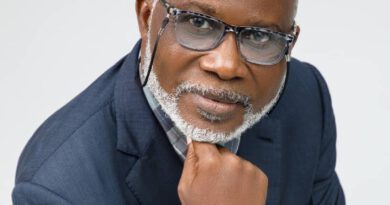
WHEN SCHOLARSHIP BECOMES SOPHISTRY: A REPLY TO LASISI OLAGUNJU’S INTELLECTUAL THEATRE
The Lagos State Chapter of the All Progressives Congress (APC) has read, with a mix of disbelief and amusement, the latest excursion into performative outrage by Mr. Lasisi Olagunju, who has once again elected to lend his column to a weary, frustrated opposition masquerading as moral philosophers.
Let us be clear from the outset: what Mr. Olagunju offers is not rigorous political analysis; it is a florid anthology of borrowed metaphors, cherry-picked quotations, and laboured analogies desperately searching for relevance in a Nigeria that has clearly moved beyond the opposition’s politics of bitterness.
That a sitting President is received by ministers and senior officials on return from an official trip is neither idolatry nor monarchy. It is protocol-mundane, global, and unremarkable. Only a columnist straining for scandal would pretend that basic state etiquette is evidence of “imperial presidency.” By this elastic logic, every democracy in the world-from Washington to Paris to Pretoria-is a shrine, and every president a god. That argument collapses under the weight of its own exaggeration.
Mr. Olagunju’s real problem is not President Bola Ahmed Tinubu; it is the collapse of the political alternatives he quietly roots for. Unable to defeat Tinubu at the ballot, they now attempt to litigate their failure in newspaper columns, hoping that verbose alarmism can succeed where voters refused them entry.
The irony is staggering. The same Bola Tinubu being accused of “imperial excess” is the man whose entire political career is built on resisting authoritarianism, decentralising power, strengthening institutions, and expanding the democratic space- often at great personal cost. The Lagos model of governance, which Mr. Olagunju conveniently ignores, is a living rebuttal to his thesis: strong institutions, vibrant opposition, independent judiciary, and uninterrupted electoral contests for over two decades.
To suggest that Nigeria’s legislature and judiciary have been reduced to items in the President’s “back pocket” is not just reckless-it is insulting to those institutions and the professionals who serve in them. Disagreement with outcomes does not translate to institutional collapse. Democracy does not mean that columnists must always get their way.
Mr. Olagunju’s essay reeks of selective amnesia. Where was this lyrical rage when opposition governors knelt before power in Abuja in years past? Where were the parables when presidents publicly bullied legislatures, suspended governors, or altered constitutions to elongate tenure? Silence then; sermon now. That is not principle-it is convenience.
We also find it curious that a writer who preaches against “idolatry” cannot resist the temptation to canonise foreign scholars while dismissing the agency, intelligence, and judgment of Nigerian voters. Nigerians did not enthrone a god; they elected a president-through a competitive, transparent process that the courts have repeatedly affirmed. To deride popular mandate as cultism is to sneer at democracy itself.
The truth Mr. Olagunju cannot stomach is simple: President Tinubu’s leadership has stabilised a drifting economy, restored seriousness to governance, and re-anchored Nigeria on the path of difficult but necessary reforms. These are achievements, not incense. Respect earned through leadership is not worship; it is legitimacy.
In the end, this essay says more about the author than its subject. It reveals an intellectual struggling to stay relevant in a political era that has passed him by, choosing hyperbole over honesty and metaphor over facts. Nigerians are wiser than this recycled outrage. They can distinguish between scholarship and spite, between critique and contrivance.
Furthermore, Mr. Olagunju and his fellow travellers should disabuse themselves of a dangerous illusion: subtle blackmail, arm-twisting tactics, and mercenary rhetoric will never confer power on a tattered opposition. Power in a democracy is not extorted through moral tantrums, syndicated outrage, or intellectual intimidation. It is earned- painfully, patiently, and transparently-and it will never be served à la carte to those who have refused to do the hard work of political organisation, credibility, and public trust.
The opposition’s growing addiction to shrill commentary and theatrical despair is not a substitute for vision, structure, or electoral appeal. It is merely the last refuge of political exhaustion. No amount of browbeating the public, demonising institutions, or mythologising protocol will compensate for the absence of a compelling alternative.
The 2027 general elections will, without sentiment or sentimentality, separate the boys from the men. Nigerians will again decide-not columnists, not armchair revolutionaries, and certainly not self-appointed gatekeepers of democracy. And let it be said plainly: no one bears a constitutional, moral, or civic duty to rescue the opposition from its unstoppable journey to perdition and political harakiri. Those determined to self-destruct should not expect the ruling party, or the Nigerian people, to intervene.
History is unforgiving to parties that mistake noise for numbers, rhetoric for relevance, and resentment for readiness. The APC is prepared for the future; the opposition is busy quarrelling with the present.
APC remains focused on governance, delivery, and democratic consolidation. We will not be distracted by the noise of those who, having lost the people, now quarrel with reality.
Mogaji (Hon) Seye Oladejo
Lagos APC Spokesman
04/02/26.