2027: Technocrat Or Politician: Tinubu’s Lagos Dilemma
By Mathew Ekeinde, Ph.D
Day after day, the shadows of 2027 continue to lengthen over the political landscape of Lagos State. As Nigeria’s most important state, and President Bola Ahmed Tinubu’s home base, the riveting attention is on who will get his backing among the long list of prospective and suitable candidates. Those who matter are watching, weighing every step, and waiting with bated breath for the direction the president would tilt. No wonder the political air is filled with unspoken ambitions. Those who are merely nailing jelly to a wall are the ones making the loudest noise in the media. But that is not the story.
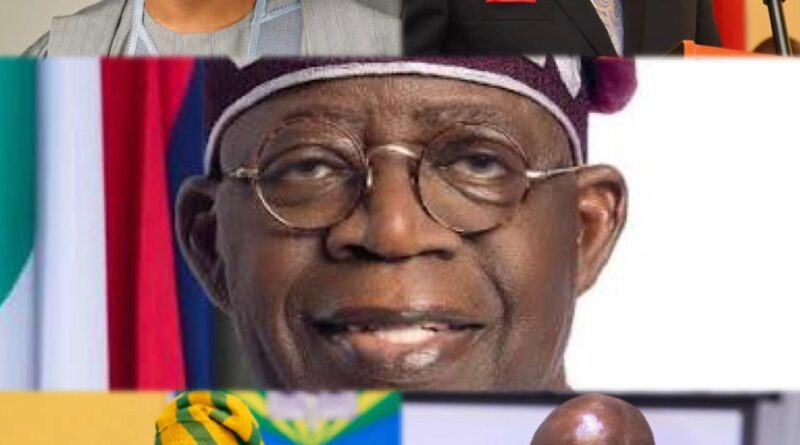
President Tinubu stands at the threshold of a defining moment for his ennobling political career and legacy. As the undisputed leader of the Lagos political family, he must have a say in who governs the state that he set on the path of progress and prosperity during his tenure from 1999 to 2007. He cannot afford not to get it right at this crucial time.
The choice before President Tinubu is stark: should he support a technocrat, as some advocate, or reward a loyal politician who has strengthened Lagos’ political machinery, as others insist? This dilemma sits at the heart of the 2027 Lagos succession debate.
Both arguments hold water. Babatunde Raji Fashola was an unknown lawyer who was appointed as then Governor Tinubu’s Chief of Staff and was supported to succeed his principal in 2007. Sources familiar with the Lagos power class said that but for mother luck and sheer bravura, Tinubu might have been upended by his protégé cum successor. It would be recalled that their simmering feud blew open when Fashola unilaterally supported Supo Shasore to succeed him in 2015 against his benefactor and the party’s choice of Akinwunmi Ambode, who eventually won. Fashola is regarded as a technocrat in politics.
Ambode, a civil servant who rose to become the state’s accountant general, succeeded Fashola. He was also labelled a technocrat. Ambode only spent a four-year term in office because of a groundswell of alleged infractions against the state’s political elite. Despite the party turning its back on him, Ambode went ahead to contest the governorship primary in 2018 and lost to the party’s choice, Sanwo-Olu.
Speaking on why the party refused to support Ambode, Tinubu said that he (Ambode) did not carry party members along and was not accessible. He added that Ambode diverged from the state’s established master plan, noting that “the ship of this state seems to have headed in a very wrong direction under his administration. Whenever a government departed from this plan without a compelling reason, the state and its people have borne the painful consequence of the improper departure.”
However, it is the unravelling of Sanwo-Olu that has left many saying that enough is enough; that the time is auspicious for President Tinubu to, for once, back a battle-hardened politician, forged in the furnace of grassroots, door-to-door hustings.
President Tinubu’s strength as a politician has been his firm grip on Lagos State politics. Every candidate he has supported for the governorship has won and succeeded. However, when Tinubu needed Lagos the most during the 2023 presidential election, his governor was unable to deliver. Lagos lost to the opposition Labour Party, to the eternal shame of Sanwo-Olu. Among other offences, Governor Sanwo-Olu particularly lost out on the president’s good graces since he reportedly bankrolled the removal of Rt. Hon. Mudashiru Obasa as Speaker of the Lagos State House of Assembly in January 2025. Despite Obasa’s reinstatement, President Tinubu viewed what Sanwo-Olu did as an unmitigated affront to his political leadership. Those are the technocrats.
Shall we, therefore, remind Mr. President that he has suffered the most vicious betrayals from politically-naïve technocrats that he helped into exalted political offices? Among others, Prof. Yemi Osinbajo readily comes to mind. Political analysts reckon that Ambode would have done worse if allowed a second term, especially in the run-up to the 2023 presidential election. The interpretation for a discerning observer, therefore, is that to avoid future betrayals, the kind of hurt that would not only hurt but alter, the president should look beyond the sharp suits, the Ivy League education, and Fortune 500 resumes. Yes, these come in handy in governance, but they don’t win elections.
And he is not in short supply of thoroughbred politicians who can hold their own anywhere in the world. Among such personalities is Speaker Obasa, who is regarded as a tested, trusted, and consummate politician with a firm understanding of Lagos politics. When Lagos floundered in 2023, Obasa still won Lagos West for the President. A six-term member of the House of Assembly, Obasa does not pretend to be a technocrat but he is a lawyer and a widely-travelled lawmaker. However, he has been present and pivotal to the socio-economic growth of Lagos over the past 10years as Speaker.
Many see him as a frontline candidate if the president is considering backing a politician with easy name recall across the state, an unblemished reputation, and unflinching loyalty to the president and the party, and one who can win elections convincingly, having done it a record six times in his Agege Constituency. Obasa’s comparative advantage is bolstered by the fact that he is a devout Muslim, a major voting bloc that has been clamouring for its adherents to occupy the seat, considering that the last two governors who have spent a combined 12years are Christians.
Coming closely on Obasa’s heels is Deputy Governor Obafemi Hamzat, whose exposure and education help to blur the thin line between a technocrat and a politician. Armed with a PhD in System Process Engineering from Cranfield University, England, Hamzat has benefitted immensely from his late father’s political influence, serving for the past over a decade as Special Adviser, commissioner, and now, a deputy governor in his second term. Conversely, he struggles to be accepted by the core political class because of his perception as an outsider and opportunist whose loyalty is only to himself, not the party. His technocratic posturing does not help his case.
Another strong personality would have been the president’s Chief of Staff, Femi Gbajabiamila. An America-trained lawyer, Gbajabiamila is suave and cosmopolitan and, like Hamzat, straddles effortlessly the technocrat and politician divide. Between 2003 and 2019, he was a member of the House of Representatives. In 2019, he emerged as Speaker of the House and served his full term until 2023. The major hurdle on his path is that he is from Lagos Central, which produced former Governors Fashola and Sanwo-Olu. Therefore, for equity and justice, that senatorial zone should not even be in consideration at all.
Though his name has featured on some analyses of potential governorship candidates, Hakeem Muri-Okunola, Principal Private Secretary to the President, cannot be said to be a technocrat even though he is a lawyer. Records show that he joined the Lagos State civil service in 2001 after a brief stint as an Associate Solicitor at a law firm. Neither can he be considered a politician in any sense. His only legitimate claim or affinity to politics would be working directly with President Tinubu since his days as a governor. Also, his meteoric rise in the civil service as Head of Service can be likened to one whose palm kernel was helped crack by a benevolent spirit, not by dint of hard work.
For Dr Tunji Alausa, current Minister of Education, who has, however, denied nursing any such ambition; and Senator Tokunbo Abiru, two formidable governorship materials, no doubt, they are, however, hamstrung by glaring unpopularity and lack of acceptance among the political class, and will struggle if given the ticket with less than 10months to the election.
At the end of the day, the ball is in the president’s court. However, subjugating critical factors like loyalty, popularity, broad acceptance, grassroots grit and appeal will spell doom for the state, and by extension, his legacy.
*•Ekeinde, Ph.D, is Director-General, Asiwaju Bola Tinubu School Of Democratic Values & Leadership, Toronto, Canada.*