NASFAT Urges Media to Uphold Ethics Over Viral Sensationalism
The Chief Missioner of Nasrul-Lahi Fatih Society (NASFAT), Imam Morufdeen Onike, has charged media practitioners in Nigeria to uphold the ethics of journalism while carrying out their constitutional responsibilities.
He also cautioned against the growing tendency among some media organisations to prioritise viral content at the expense of professional ethics, warning that journalists would ultimately be accountable for their actions before God.

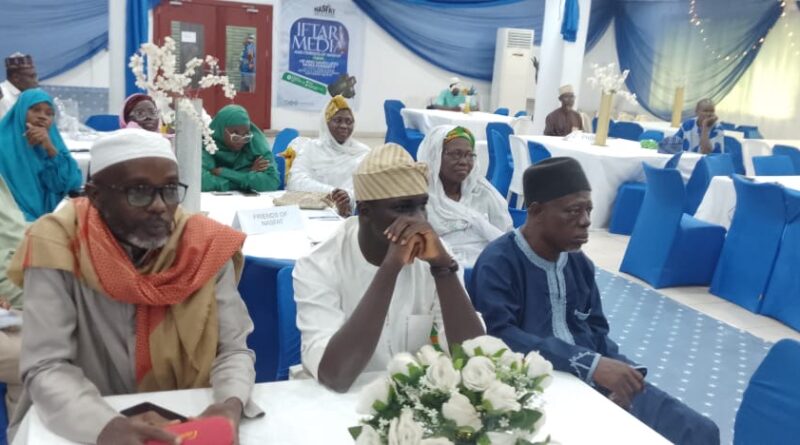
Imam Onike gave this advice during his brief remarks at the Iftar with the Media and Friends of NASFAT held at the CIPM Banquet Hall.
According to him, since the media plays a critical role in setting the agenda and shaping societal narratives, practitioners must be mindful of the information they release to the public.
In his remarks, the President of NASFAT, Alhaji Ayodeji Abdulrauf, congratulated Muslims across the world on the Ramadan fast, describing the holy month as a period for compassion, resilience, and brotherhood that brings out the best values among families and communities.
He noted that Nigeria is blessed with a vast Muslim community that cuts across professionals from all walks of life, adding that NASFAT promotes unity and regards both Muslims and Christians as members of one family.
The NASFAT president also expressed concern about narratives promoting division among Nigerian Muslims, particularly amid the country’s ongoing security challenges.
He urged participants to remember Muslims in countries such as Palestine, Lebanon, Iran, and Pakistan who are facing hardship and cannot celebrate the holy month of Ramadan peacefully with their families.
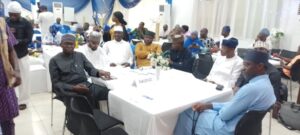
Abdulrauf further called for support for NASFAT’s ongoing projects, while urging Nigerians to continue praying for their leaders and also strive to be responsible followers.
Delivering a lecture at the event, Imam Abdulganiy Raji described the media as nation builders, defenders of the weak and oppressed, and powerful opinion moulders.
He noted that every profession contributes to saving lives, citing examples of doctors delivering babies, teachers shaping and refining young minds, and soldiers defending the nation’s territorial integrity.
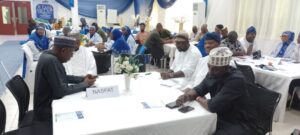
However, he expressed concern that some media outlets focus mainly on negative narratives about the country, warning that sensational reporting, including unverified claims about religious violence, could worsen existing tensions.
In his goodwill message, the Lagos State Commissioner for Youth, Mobolaji Ogunlende, decried the use of the media as a tool for misleading the public.
He cited the case of a lady identified as Mirabel in Ogun State who alleged sexual abuse in a story that went viral but was later discovered to be false.
Ogunlende urged parents to closely monitor the type of content their children access on social media platforms.
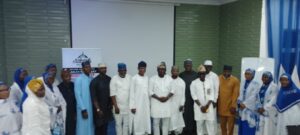
Also speaking at the event, the Special Adviser to the Lagos State Governor on Media and Publicity, Gboyega Akosile, described the media as a catalyst for growth and development in society.
Akosile noted that the media remains one of the most powerful tools in the world for shaping humanity and encouraged Muslim clerics to maximise its potential for promoting Islamic teachings, just as their Christian counterparts have done.
The forum was attended by several Nollywood practitioners, including Abdulateef Adedimeji, Afeez Abiodun, Muyideen Lala and Fathia Balogun, as well as movie producers Kazem Adeoti and Adebayo Tijani.
They pledged to prioritise film projects that promote Islam and Da’wah.
The theme of the Iftar with the Media and Friends of NASFAT was “He Who Saves a Life, Saves Humanity.”