NIJ Matriculates 293 Students, Provost Charges Freshers on Ethics, Innovation and Academic Discipline
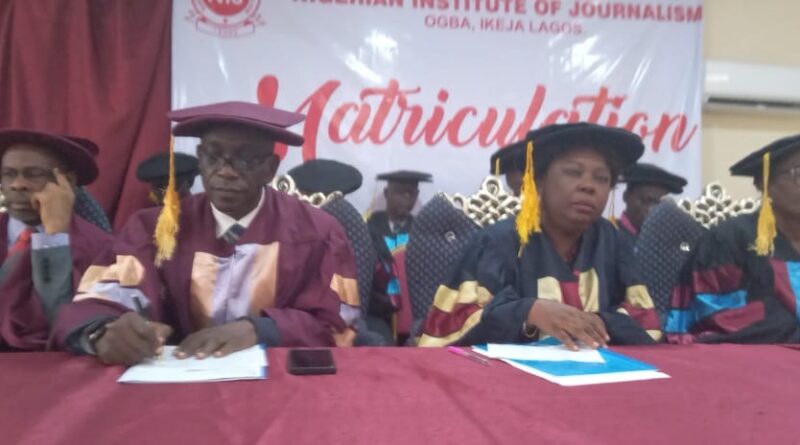
The Nigerian Institute of Journalism (NIJ), Ogba, Lagos, on Wednesday formally admitted 293 students into its National Diploma (ND), Higher National Diploma (HND) and Postgraduate Diploma (PGD) programmes at its 23rd Matriculation Ceremony.
The ceremony, held at the Sir Kensington Adebutu Media Resource Centre, marked the formal induction of the Class of 2026 into what the Provost, Mr. Gbenga Adefaye, described as “Nigeria’s foremost journalism and media training institution.”

Addressing the matriculating students, parents, faculty and invited guests, Adefaye said matriculation was more than a ceremonial rite, describing it as “a solemn academic covenant” that inducts students into the intellectual tradition and ethical culture of the Institute.
“By taking the Matriculation Oath and signing the Register, you affirm your commitment to discipline, integrity, and academic excellence,” he said, adding that the students are now bona fide members of the NIJ community, entitled to its privileges and bound by its responsibilities.
Adefaye disclosed that the newly admitted students comprise 138 ND students, 69 HND students and 86 PGD students, each representing “a future voice in Nigeria’s media and public communication landscape.”
He noted that their admission was conducted in strict compliance with national standards in collaboration with the Joint Admissions and Matriculation Board (JAMB) and processed through the Central Admissions Processing System (CAPS), guaranteeing the integrity of their records and eligibility for NYSC mobilisation where applicable.
The Provost highlighted the rapidly evolving nature of journalism and mass communication, pointing to the disruptive impact of digital technology, artificial intelligence, data-driven storytelling and the complex global information ecosystem.
“The modern media professional must be skilled not only in reporting but also in multimedia production, podcasting, digital investigations, fact-checking and strategic content management,” he said. “Your education at NIJ is structured to prepare you not merely to adapt to this change, but to lead it with competence, courage and conscience.”
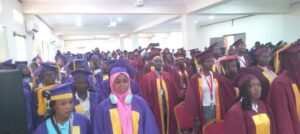
He reaffirmed NIJ’s longstanding tradition of blending rigorous academic instruction with hands-on professional training, describing the balance between theory and practice as the bedrock of the Institute’s reputation spanning over five decades.
Adefaye set out clear expectations for the new students, stressing that a minimum of 70 per cent lecture attendance is mandatory for examination eligibility, while continuous assessments, practical assignments and projects would be strictly enforced.

“NIJ is not a certificate factory,” he declared. “We are a professional academy committed to producing ethical, disciplined and socially responsible communicators dedicated to truth, accountability and public interest.”
He urged students to maintain proper dress and comportment, noting that journalism is a profession built on credibility, and to treat institutional facilities, including two newly equipped ICT laboratories, with care.
The Provost outlined several opportunities available to students, including field trips to media organisations and advertising agencies, participation in the Student Industrial Work Experience Scheme (SIWES), professional competitions, entrepreneurship training, media innovation labs and intensive newsroom practice across print, broadcast and digital platforms.
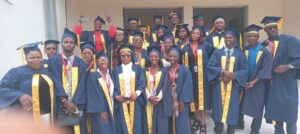
He revealed that many media organisations regularly request NIJ’s best interns for employment, underscoring the Institute’s industry relevance.
Reiterating the institution’s commitment to stability, Adefaye described academic continuity as one of NIJ’s proudest achievements, noting that the Institute has maintained an uninterrupted academic calendar without strikes or avoidable delays.
He also announced that in December 2024, NIJ successfully concluded its accreditation exercise with the National Board for Technical Education (NBTE), securing full institutional accreditation valid until 2030, full accreditation for the ND programme until 2030, and provisional accreditation for its newly disaggregated HND programmes in Journalism and Media Studies, and Strategic Communication and Media Studies.
According to him, the development positions NIJ at the forefront of modern and globally relevant media education in Nigeria.
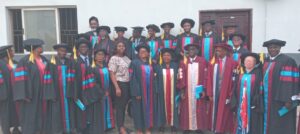
Warning about the growing threat of misinformation, deepfakes and the misuse of artificial intelligence, the Provost reminded students that fake news is no longer a minor nuisance but a threat to public trust and democratic stability.
“Your training here is both a privilege and a public responsibility,” he said.
He urged the Class of 2026 to embrace curiosity, resilience, respect for diversity and a commitment to community as guiding principles for their academic journey.
“Nigeria needs journalists and applied mass communicators who are courageous, competent and ethically principled. NIJ will equip you with the skills, confidence and professional identity that will define your career long after graduation,” Adefaye said.